

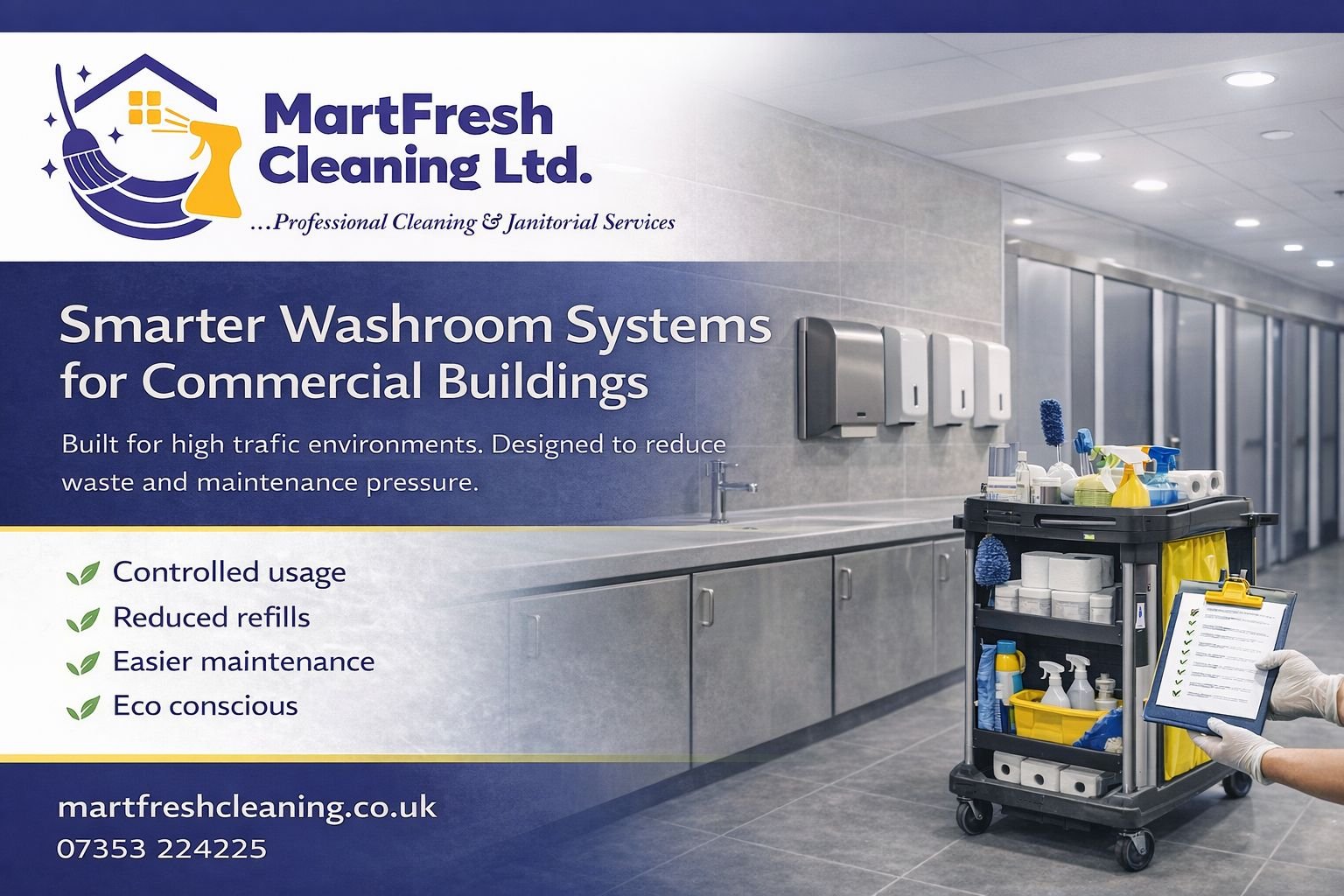

Washroom upgrades fail more often than they succeed. Not because businesses do nothing, but because they focus on cheaper products instead of smarter systems.
Across offices, HMOs, communal blocks, and managed commercial buildings in Birmingham, washrooms are one of the most complained-about areas. Despite new dispensers, new brands, or reactive deep cleans, the same issues return. Empty soap units. Overflowing bins. Excessive paper use. Rising cleaning costs.
The problem is not the brand.
The problem is the system.
This article explains why most washroom upgrades fail, what actually works in high-traffic environments, and how Birmingham property managers can reduce cost, complaints, and risk in 2026.
The real reason washroom “savings” fail
Most washroom cost-cutting attempts start with one question.
“How can we reduce spend on consumables?”
That question leads to cheaper paper, cheaper soap, or cheaper refills. What it does not address is behaviour.
If a washroom allows unrestricted usage, people will use more.
If dispensers are low capacity, refills increase.
If soap dosing is inconsistent, waste rises.
If checks are reactive, problems go unnoticed until complaints arrive.
This is why many commercial washroom upgrades fail within weeks. The products change, but the operating system stays the same.
In high-traffic environments such as Birmingham city centre offices, HMOs in Erdington or Washwood Heath, and managed blocks in Moseley or Solihull, behaviour matters more than brand.
High traffic without system design creates hidden costs
Washrooms are not static spaces. Usage fluctuates daily.
Hybrid offices experience Tuesday to Thursday peaks.
Student accommodation sees evening and weekend surges.
HMOs have unpredictable patterns.
Communal blocks spike during mornings and evenings.
When washroom systems are not designed for these realities, costs creep quietly.
More refills mean more staff time.
More waste means more disposal cost.
More reactive cleans mean disrupted schedules.
The financial impact rarely appears on one invoice. It appears gradually across labour, call-outs, complaints, and recleans. This is why professional commercial cleaning services in Birmingham focus on system control, not surface appearance alone.
What works instead is system thinking and not product swapping.
1. Controlled usage by design
Effective washroom systems limit waste without relying on behaviour change.
Measured soap dosing reduces overuse.
Single-sheet or controlled towel dispensing cuts paper waste.
Higher-capacity dispensers reduce refill frequency.
This is particularly effective in communal area cleaning across Birmingham, where footfall is high and staffing time is limited.
2. Capacity matched to building usage
Many washrooms fail simply because dispensers are undersized for traffic levels.
Low-capacity systems create frequent refill cycles and visible service gaps. High-capacity systems allow cleaners to service on schedule rather than react to shortages.
This matters in facilities management cleaning across Birmingham, where time efficiency and consistency directly affect cost.
3. Replenishment linked to traffic, not fixed timing
Fixed schedules do not reflect real building use. What works is a traffic-based approach.
– Peak periods receive additional checks.
– Low-use periods focus on deeper cleaning and inspection.
This aligns cleaning effort with actual risk, not assumptions.
4. One standard, written and enforced
Washroom standards fail when they are informal. Professional block management cleaning and office cleaning in Birmingham require documented standards. Refill thresholds. Cleaning frequency. Touchpoint priorities. COSHH-compliant product use.
When standards are written, training is consistent. When training is consistent, outcomes stabilise.
Why this matters more in Birmingham buildings
Birmingham presents specific challenges like: High-density offices in the city centre, older buildings with limited ventilation, large HMOs with shared facilities, mixed-use developments combining residential and commercial traffic.
One-size-fits-all washroom solutions do not work here. Cleaning systems must adapt to how spaces are actually used. This is why professional commercial cleaners in Birmingham increasingly focus on process design rather than visible upgrades alone.
How MartFresh approaches washroom systems
At MartFresh Cleaning Ltd, washroom performance is treated as an operational function, not a cosmetic task. Our approach focuses on:
- – Correct system selection for traffic level
- – Controlled dispensing to reduce waste
- – Capacity planning to cut refill labour
- – COSHH-compliant products and dilution
- – Documented checks and audit trails
This applies across office cleaning, HMO and communal area cleaning , and facilities management cleaning in Birmingham and surrounding areas.
The goal is simple. Fewer complaints. Lower long-term cost. Consistent hygiene.
Final thought
Most washroom upgrades fail because they aim to spend less, not work smarter. The businesses that succeed do not chase cheaper products. They invest in systems that control usage, reduce labour, and maintain standards under pressure.
In 2026, washrooms are no longer a background detail. They are a visible signal of how well a building is managed. If your washroom setup relies on constant refilling, reactive cleaning, or complaints to trigger action, the system has already failed.
FAQs
What causes washroom upgrades to fail in commercial buildings?
Most washroom upgrades fail because they focus on cheaper products instead of system design. Without controlled dispensing, correct capacity, and traffic-based cleaning schedules, waste increases, refills rise, and labour costs grow. The issue is rarely the brand. It is usually the lack of a structured washroom management system.
How often should commercial washrooms be cleaned in Birmingham offices?
In Birmingham offices, washrooms should be cleaned daily as a minimum, with additional checks during peak occupancy days such as Tuesday to Thursday. High-traffic buildings may require multiple touchpoint cleans per day to maintain hygiene standards, reduce complaints, and remain inspection ready.
Why do communal washrooms in HMOs need a different cleaning approach?
HMO washrooms experience unpredictable usage and higher wear. A standard domestic cleaning routine is not sufficient. Communal washrooms require controlled consumables, documented cleaning schedules, and frequent touchpoint sanitising to prevent hygiene issues, odours, and tenant complaints.
Do better washroom systems actually reduce cleaning costs?
Yes. Purpose-built washroom systems reduce waste, refill frequency, and reactive cleaning. When dispensers are matched to traffic levels and usage is controlled, staff time is used more efficiently. Over time, this lowers labour costs and reduces the need for emergency cleans or reworks.
What should facilities managers look for in a commercial washroom cleaning provider?
Facilities managers should look for documented procedures, COSHH compliance, traffic-based cleaning schedules, and clear audit trails. A professional provider should manage washrooms as an operational system, not just a cleaning task, ensuring consistency across offices, communal areas, and managed buildings.