


A neglected bin store or a dusty stairwell is more than just a tenant grievance; it’s a direct threat to your compliance standing under Birmingham’s strict HMO licensing requirements. You know that maintaining a multi-unit block requires constant vigilance, yet unreliable communal area cleaning and vague service scopes often leave you fielding complaints instead of managing your portfolio. It’s frustrating when a contractor fails to meet the rigorous standards expected during a health and safety audit, leaving you to manage the fallout.
This guide demonstrates how professional cleaning standards ensure your Birmingham managed properties remain inspection-ready and fully compliant with local regulations. We’ll outline the essential protocols that protect your professional reputation, satisfy tenant expectations, and reduce management stress through a robust, set and forget schedule. You’ll discover how a disciplined approach to facility maintenance creates a consistently clean building that impresses visitors and meets every contractual obligation without the need for constant oversight.
Key Takeaways
- Learn how professional standards give Birmingham block managers a competitive edge in an increasingly demanding urban property market.
- Identify the critical high-traffic touchpoints and sanitisation requirements essential for maintaining hygiene in complex HMO and residential block environments.
- Understand the vital link between consistent communal area cleaning and meeting Fire Risk Assessment (FRA) standards to ensure total building compliance.
- Discover the two-step process for designing a bespoke maintenance schedule that aligns service frequency with your building’s specific occupancy levels.
- Gain insights into the “MartFresh Standard” and how to achieve a baseline of inspection-ready spaces that satisfy both regulators and tenants.
The Strategic Role of Communal Area Cleaning in Birmingham Properties
Professional communal area cleaning represents a critical B2B facility management function rather than a simple janitorial task. For block managers and landlords across the West Midlands, maintaining shared spaces has become a high-stakes operational requirement. Birmingham’s ongoing urban regeneration, particularly the £1.9 billion Smithfield development and the expansion of the Big City Plan, has flooded the market with premium residential and commercial units. This increased supply means property professionals must differentiate their assets through superior maintenance standards to remain competitive.
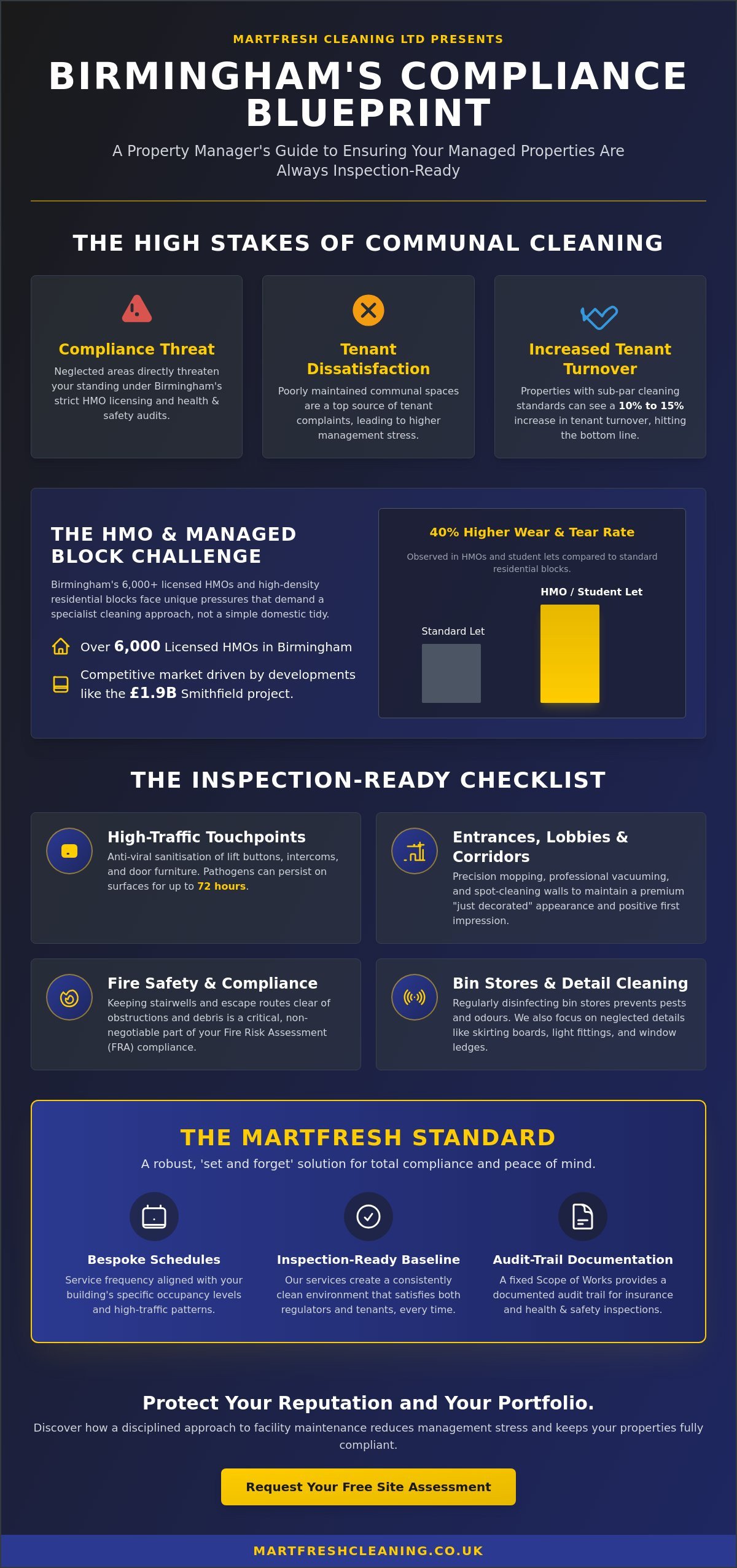
The distinction between a domestic tidy and a commercial inspection-ready standard is significant. While a domestic approach might address visible dust, a professional communal area cleaning service focuses on hygiene compliance, fire safety in stairwells, and the removal of pathogens in high-touch zones. In competitive districts like Digbeth and the Jewellery Quarter, where rental yields depend on professional tenant satisfaction, the state of the hallway is the first indicator of management quality. Properties that fail to meet these rigorous standards often see a 10% to 15% increase in tenant turnover, which directly impacts the landlord’s bottom line.
Defining the Communal Scope for Property Professionals
A comprehensive site assessment begins by identifying What are communal areas? within the specific building footprint. This typically includes entrance lobbies, internal stairwells, passenger lifts, and external bin stores. Property managers must distinguish between daily maintenance and specialist deep cleans, such as carpet steam cleaning or high-level dusting. Establishing a fixed Scope of Works prevents contractual ambiguity and ensures every clean is compliance-led. It provides a documented audit trail that is essential for insurance purposes and health and safety inspections.
Why Birmingham Landlords Prioritise Shared Space Hygiene
Professional tenants in Birmingham city centre expect hotel-standard environments. Clean, well-maintained corridors do more than look good; they actively discourage antisocial behaviour amongst residents. Research indicates that environmental triggers, such as accumulated litter or stained carpets, can lead to a decline in resident respect for the property. By investing in reliable communal area cleaning, firms protect their brand reputation. A pristine lobby serves as a silent salesperson, reinforcing the management company’s commitment to quality and ensuring the building remains a desirable asset in a crowded B1 and B3 postcode market.
Essential Cleaning Tasks for HMOs and Managed Residential Blocks
Birmingham’s residential landscape includes over 6,000 licensed HMOs, each presenting distinct operational pressures for property managers. Maintaining these high-density environments requires more than a surface-level tidy; it demands a rigorous, compliance-led approach. Communal area cleaning in these settings must account for the 40% higher wear-and-tear rates typically observed in professional shares and student accommodation compared to standard residential lets. Effective management starts with identifying high-traffic touchpoints that act as vectors for bacteria.
Daily or weekly sanitisation must prioritise lift buttons, intercom panels, and door furniture. Pathogens can persist on stainless steel and plastic surfaces for up to 72 hours, making anti-viral cleaning a critical component of your health and safety obligations. A diligent specialist also looks beyond the obvious. Neglected areas like skirting boards, the tops of light fittings, and internal window ledges often accumulate layers of grime that degrade the building’s fabric over time. Addressing these details ensures the property remains inspection ready at all times.
Entrances, Lobbies, and Corridors: The First Impression
The entrance sets the standard for the entire building. Professional-grade vacuuming of heavy-duty carpets and precision mopping of hard floors using pH-neutral solutions are fundamental. We focus on removing ingrained dirt that domestic equipment misses. Mirrors, framed fire exit plans, and decorative features require consistent polishing to maintain a premium feel. Spot-cleaning walls to remove scuff marks from move-ins helps maintain that “just decorated” appearance, reducing the frequency of expensive cyclical redecorations. For a tailored approach to your building’s needs, you can request a site assessment from our team.
Ancillary Spaces: Bin Stores, Cycle Racks, and Laundry Rooms
Hygiene in ancillary areas is a matter of compliance and tenant retention. Bin stores are high-risk zones for pest infestations and foul odours; these spaces require regular sweeping and pressure washing to meet sanitary standards. Shared laundry facilities must be kept free of lint buildup and detergent spills to ensure resident safety and machine longevity.
Safety remains the primary driver for cleaning in these often-overlooked zones. Clear egress routes are mandatory under the Regulatory Reform (Fire Safety) Order 2005, which requires communal parts to be free of combustible materials and obstructions. Our teams ensure that external cycle stores and plant rooms remain free of accumulated litter and discarded items, directly supporting your fire risk assessment (FRA) requirements. This methodical attention to detail ensures that compliance is built into every clean, protecting both the landlord’s investment and the residents’ wellbeing.
Ensuring Compliance and Fire Safety through Professional Cleaning
Property managers often mistake communal area cleaning for a discretionary aesthetic service. It isn’t. In the West Midlands, cleanliness is a fundamental legal safeguard rather than a luxury. High-traffic zones must remain free from combustible waste and trip hazards to meet statutory obligations. When a building’s hygiene is neglected, it doesn’t just look poor; it becomes a liability for the “responsible person” under UK law.
Fire Risk Assessments (FRA) consistently identify the accumulation of discarded post, cardboard, and general debris as a primary risk factor in residential blocks. The Fire Safety (England) Regulations 2022 require those in charge of multi-occupied buildings to maintain clear, safe escape routes at all times. A professional cleaning schedule ensures that stairwells and corridors don’t become storage areas for flammable materials. Our digital cleaning reports provide the concrete audit trail needed to prove diligent management to local authorities and insurers during an inspection.
Meeting Birmingham City Council HMO Standards
Birmingham City Council enforces strict licensing conditions for Houses in Multiple Occupation (HMOs), particularly following the expansion of additional licensing schemes in June 2023. Landlords are legally liable for the hygiene of shared kitchens, bathrooms, and hallways. Failure to maintain these areas can result in heavy financial penalties or the revocation of a license. To remain inspection-ready, managers should follow this compliance checklist:
- Entryways: Removal of all unsolicited mail and flyers that pose a fire spread risk.
- Touch Points: Daily sanitisation of bannisters, door handles, and intercom panels.
- Escape Routes: Complete removal of any obstructions, including shoes or small items of furniture.
- Shared Facilities: Deep cleaning of extraction fans and cookers to prevent grease-related fire hazards.
Health and Safety Compliance in the West Midlands
Using COSHH-compliant chemicals is non-negotiable in residential settings. We ensure all detergents are stored and applied according to strict safety data sheets to protect residents with respiratory sensitivities. Every operative is fully vetted and insured, providing a secure presence in your building. Beyond surface level communal area cleaning, a professional cleaner acts as an essential first responder for maintenance, identifying building defects like cracked floor tiles or blown emergency lighting during their scheduled rounds to prevent minor issues from becoming major liabilities. This proactive approach ensures that your property remains safe, compliant, and functional for all occupants.
Designing a Custom Maintenance Schedule for Your Building
Property managers often struggle with inconsistent results when they lack a documented strategy. A custom maintenance schedule transforms cleaning from a reactive chore into a proactive asset management tool. By following a logical progression, you can ensure every square metre of your building reflects your high standards. This process begins with a granular understanding of your site’s physical layout and the specific behaviours of your residents. For facilities managers in Birmingham, a structured approach ensures that communal area cleaning remains consistent and compliant with health and safety standards.
- Step 1: Conduct a professional site assessment. Identify high-use areas and specific needs. Focus on touchpoints like lift panels, door handles, and mailboxes that require frequent sanitisation to maintain an inspection-ready environment.
- Step 2: Define the frequency of service based on occupancy. High-density blocks often require daily visits, whilst smaller residential units may only need twice-weekly or fortnightly attendance to stay tidy.
- Step 3: Establish a clear communication channel. Creating a direct line between the FM team and the cleaning contractor ensures that specific requests or emergencies are handled without delay.
- Step 4: Implement a reporting system. Track attendance and task completion through digital logs. This provides the transparency needed for compliance audits and performance reviews.
- Step 5: Schedule periodic deep cleans. Plan for carpet shampooing and window cleaning every three to six months. These intensive sessions remove deep-seated grit that regular communal area cleaning cannot reach.
Factors Affecting Cleaning Frequency and Cost
Building demographics dictate the intensity of the cleaning programme. A high-density student block in Selly Oak experiences significantly more footfall than a luxury development in the Jewellery Quarter. High-traffic buildings often require daily attendance, whilst smaller blocks stay pristine with twice-weekly visits. Implementing preventative cleaning can reduce long-term maintenance costs by 15% by extending the life of expensive floor finishes and upholstery.
Key Management and Access Protocols
Logistics are a critical hurdle in block management. We utilise secure key-holding protocols to access Birmingham residential blocks without compromising security. Choosing a local provider offers a 2-hour rapid response for emergency call-outs or sickness cover. Our teams work during off-peak hours to ensure minimal disruption to residents, maintaining a quiet but thorough presence that supports a professional, high-standard atmosphere for all occupants.
Ensure your property meets the highest standards of hygiene and safety. Book your professional site assessment with MartFresh Cleaning today.
MartFresh: Specialist Communal Cleaning for Birmingham Property Professionals
MartFresh operates as a dedicated partner for Birmingham property managers who require more than a surface-level tidy. We provide a disciplined, B2B service focused on the high-stakes requirements of commercial and residential portfolios. Our “MartFresh Standard” ensures every square foot is inspection-ready. This means we don’t just clear litter or mop floors; we maintain your assets to meet strict health and safety audits. By integrating compliance-led delivery into our daily routines, we alleviate the regulatory burden on FM teams and block managers across the West Midlands. We understand that a clean environment is a legal and functional necessity, not a luxury.
Our role as a Diligent Specialist involves proactive communication and rigorous quality control. We don’t wait for a complaint to act. Instead, we use structured checklists and regular audits to ensure consistency. This professional shorthand for high standards is what separates MartFresh from generic cleaning agencies. We’re built for the property professional who values systems, processes, and documentation. Our teams are trained to recognise the specific needs of high-density urban living, ensuring that your buildings remain safe, welcoming, and fully compliant with current UK habitability standards.
Our Approach to Block Management and HMOs
Every Birmingham site has unique requirements. We begin with a rigorous scope definition process to identify high-traffic zones and specific risk areas. Our communal area cleaning contracts are built on transparency. You won’t find hidden costs or vague service level agreements here. We provide reliable, contractual cleaning schedules that keep HMOs and large residential blocks in peak condition. For managers overseeing multiple sites, we offer a consolidated approach that ensures consistency across your entire portfolio. We invite you to request a professional site assessment to see how our structured workflows can improve your property’s performance.
- Bespoke cleaning frequencies based on footfall and building usage.
- Dedicated account management for FM teams and block managers.
- Transparent reporting and digital proof of service for every visit.
- Focus on high-touch point sanitisation and floor care.
Why Local Expertise Matters in the West Midlands
Proximity is a critical factor in service reliability. Being based in the heart of the city allows us to reach key postcodes like B1, B2, and B3 within minutes. This local presence means we understand the specific challenges of Birmingham’s property market, from the rapid turnover in Jewellery Quarter apartments to the high-density requirements of city centre student blocks. Our teams are familiar with local access protocols and the logistical nuances of West Midlands infrastructure. This regional insight ensures our communal area cleaning remains efficient and responsive to your needs. If you’re ready to upgrade your property maintenance, Contact MartFresh for a professional communal area cleaning quote in Birmingham.
Securing Long-Term Compliance for Your Birmingham Portfolio
Maintaining high standards in shared spaces isn’t just about aesthetics; it’s a critical component of block management and fire safety under the Regulatory Reform (Fire Safety) Order 2005. For property professionals in the West Midlands, a consistent communal area cleaning schedule ensures that HMOs and residential blocks remain inspection-ready at all times. MartFresh operates as a specialist commercial contractor focused specifically on the Birmingham B2B sector, providing the reliability that facilities management teams require to meet their contractual obligations.
Our compliance-led delivery means we don’t just tidy up; we follow strict protocols to meet the health and safety standards expected in the 2024 UK property market. With a local team that offers guaranteed sickness cover, you eliminate the risk of service gaps that lead to tenant complaints or failed audits. You can protect your building’s reputation and ensure legal adherence by partnering with a disciplined provider that understands the Birmingham regulatory landscape. We’re ready to help you maintain a safe, professional environment for every resident.
Request an Inspection-Ready Site Assessment for Your Birmingham Property
Frequently Asked Questions
What is included in a standard communal area cleaning contract?
A standard contract covers all shared internal spaces including entrances, hallways, stairwells, and lifts. Our teams focus on high-traffic touchpoints like bannisters, intercoms, and light switches to ensure the building is inspection ready. We also include floor maintenance and internal glass cleaning as part of the core specification. This structured approach ensures every corner of your Birmingham property meets health and safety requirements.
How often should communal areas in a Birmingham HMO be cleaned?
HMO properties with five or more occupants typically require weekly communal area cleaning to maintain statutory hygiene standards. High-density residential blocks in Birmingham city centre often see 40% more footfall than standard dwellings, making frequent visits essential for waste management and floor care. We adjust the frequency based on your specific occupancy levels and the results of our initial site assessment.
Does professional cleaning help with my building’s Fire Risk Assessment?
Professional cleaning directly supports your Fire Risk Assessment by ensuring all escape routes remain free from combustible waste and obstructions. Our staff are trained to identify and report hazards that could breach the Regulatory Reform (Fire Safety) Order 2005. By removing accumulated post and keeping fire doors clear, we help property managers maintain a 100% compliance record during official inspections.
Are your cleaners insured to work in residential apartment blocks?
Every operative is fully covered by our £10 million Employers’ Liability and £5 million Public Liability insurance policies. These specific coverages protect block managers and residents against accidental damage or injury within the communal spaces of residential apartment blocks. We provide digital copies of these certificates to our clients’ FM teams before any work commences on-site to ensure full contractual peace of mind.
How do you handle key security for managed properties in Birmingham?
We manage key security through a rigorous tracking system where keys are coded and stored in a secure central facility. Our Birmingham field teams use a check-in system that logs key possession in real-time; this ensures no identification tags ever feature the property address. This protocol mitigates the risk of unauthorised access and protects the 120 properties we currently manage across the West Midlands.
Can you provide one-off deep cleans for communal areas in the West Midlands?
We provide specialised one-off deep cleans for properties throughout the West Midlands that require an intensive restorative service. These visits often follow construction work or precede a new management contract to establish a baseline of cleanliness. Our deep clean teams use industrial-grade equipment to sanitise carpets and hard floors, ensuring the building is immediately ready for tenant inspections or marketing photographs.
How do you ensure cleaning standards remain consistent over time?
Consistency is maintained through our digital audit system and monthly supervisor inspections. Every cleaner completes a bespoke site checklist via a mobile application, which requires photographic evidence of completed tasks before they can sign off. This data allows us to track performance trends across 100% of our service sites, ensuring that the high standards established during the first month are sustained indefinitely.
What happens if a cleaner is unable to attend their scheduled shift?
If a primary cleaner is absent, our mobile relief team is deployed to cover the shift within a 4-hour window. We maintain a dedicated pool of vetted backup staff who are familiar with our Birmingham site portfolios and security protocols. This redundancy system ensures your property never misses a scheduled communal area cleaning visit, maintaining the professional environment that your tenants and leaseholders expect.
[…] A generic approach fails in high-density environments. A written “Scope of Works” is essential for any Birmingham cleaning contract to ensure accountability. This document defines exactly what’s cleaned, how often, and to what standard. We focus on high-traffic touchpoints that domestic cleaners often overlook, such as lift buttons, bannisters, and intercom panels. These areas are critical for infection control and are the first things inspectors check. Defining these tasks clearly ensures that no detail is missed during a scheduled visit. For a deeper look at how we manage these requirements, read our guide on communal area cleaning. […]
[…] HSE and Local Authority Guidelines: Adherence to official guidelines for communal areas is non-negotiable. For a detailed breakdown, see our guide to inspection-ready communal spaces. […]
[…] these visits with your communal area cleaning schedule prevents the cross-contamination of dust and debris. It ensures the entire building […]
[…] communal exits and hallways remain clear of debris. For those managing larger portfolios, our Communal Area Cleaning in Birmingham guide provides deeper context on maintaining inspection-ready standards across multi-unit blocks. This […]
[…] asset value and legal standing. You can find more detail on this philosophy in our guide to Communal Area Cleaning in Birmingham: The Property Manager’s Guide to Inspection-Ready Spaces. When providing office cleaning services Walsall, we prioritise these high-stakes outcomes over […]
[…] before work commences. We have a proven track record of maintaining these standards across Birmingham and Dudley hubs, where high-density rental stock demands constant vigilance and a professional […]