

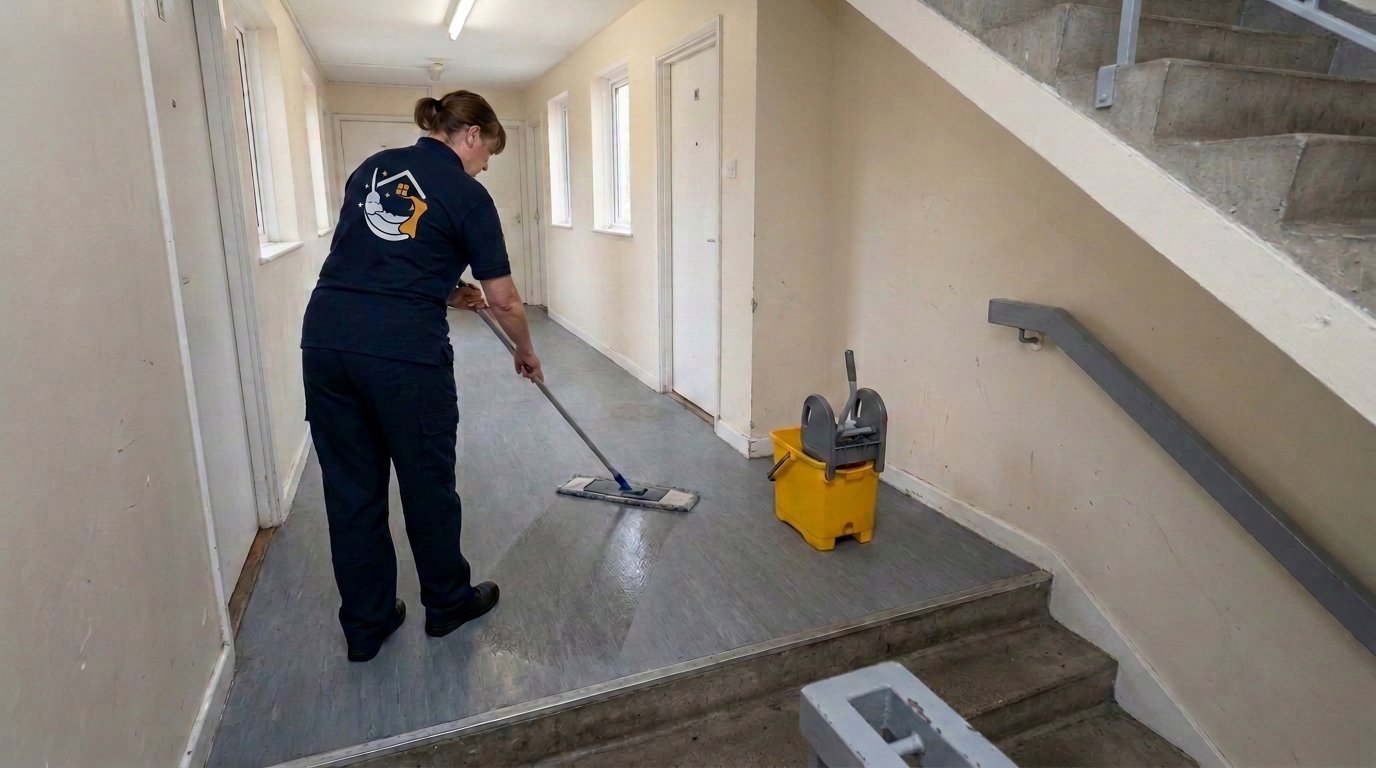

Communal hallway cleaning in Wolverhampton should follow the floor type and site use: in blocks with concrete or vinyl communal floors, floors, stairs and landings are scheduled to be swept, washed, disinfected and cleared of litter monthly.
For property managers, block managers, landlords and housing associations, the practical task is to set a specification that reflects foot traffic, surfaces and the shared areas in scope, from entrance halls and corridors to stairwells, lifts and shared facilities. A clear schedule sets consistent expectations while allowing for differences between buildings.
This guide explains what communal area cleaning can cover, how schedules for concrete or vinyl floors can be structured, and who the service suits. Use it to define the right scope for a managed residential block and maintain presentable communal areas through planned, accountable cleaning.
Key Takeaways
- Set the cleaning scope around the block’s communal areas, including entrances, corridors, stairwells and lifts.
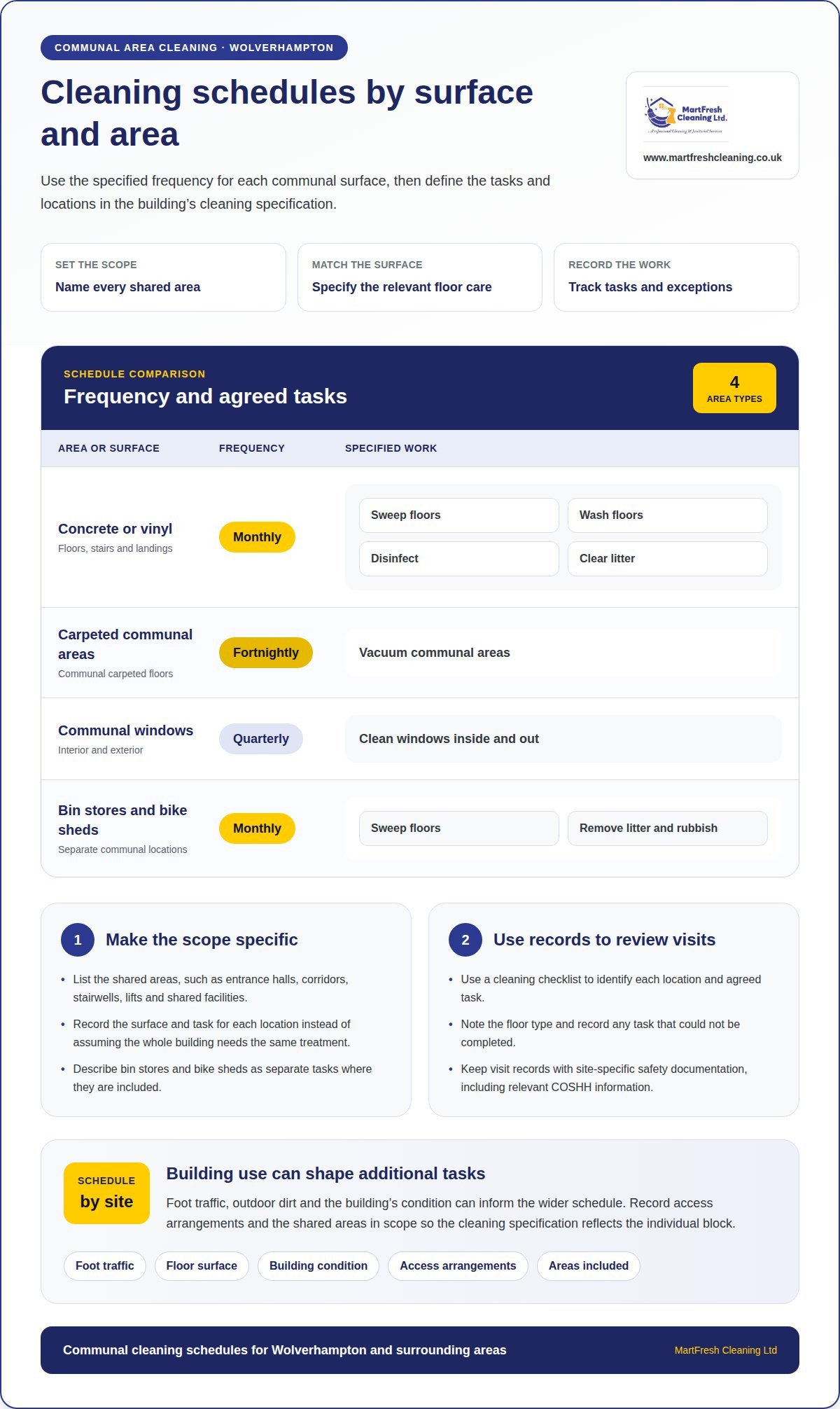
- For concrete or vinyl floors, the stated schedule is monthly sweeping, washing, disinfection and litter clearance across floors, stairs and landings.
- Keep common parts clear of unwanted items and rubbish, as clutter can create fire risks.
- A written cleaning specification and checklist can help property teams set clear expectations and support consistent quality control.
Apartment-block communal area cleaning
A cleaning specification for an apartment block should identify the shared areas, tasks and visit arrangements. In Wolverhampton, it can separate routine cleaning from periodic work and property maintenance.
Typical Communal-Area Duties
Routine duties may include vacuuming carpet, mopping hard floors, wiping reachable surfaces and removing litter. List entrance doors, internal glass and lift touchpoints separately to make the agreed scope clear. Deep cleaning can address accumulated dirt beyond routine tasks. Bin stores and bike sheds may need their own task descriptions rather than being assumed to fall within hallway cleaning.
Shared commercial areas, such as an office reception in a mixed-use block, may need a separate scope. Reviews describe individual customer experiences, but they do not define the tasks or standards for a particular building. A property-specific specification sets those expectations.
Scheduled Cleaning Visits
A schedule assigns each task to a planned visit and records periodic work separately. This helps property teams distinguish regular floor care from less frequent work, such as cleaning internal windows or other agreed areas. The appropriate scope depends on surfaces, building use, condition, access arrangements and which shared areas are included.
Cleaning is also distinct from redecoration. A visit can remove routine marks from accessible surfaces, while damaged paintwork or worn finishes require maintenance. Recording these separately prevents a cleaning checklist from being treated as a repairs schedule.
The cleaning required for a Wolverhampton block depends on its size, condition, access arrangements, frequency and agreed scope. These factors determine which tasks belong in the schedule, such as hallway floor care, lift surfaces or bin-store cleaning.
For a larger block, a site assessment can help identify areas and tasks before agreeing the specification. Clear records then give the property team a practical reference for reviewing completed work and logging missed tasks.
Cleaning schedules for concrete or vinyl communal areas
For concrete or vinyl communal areas, the stated schedule is monthly cleaning of floors, stairs and landings. The specification should make the work and expected service standards clear for the building.
Cleaning Shared HMO Areas
In an HMO, define shared routes separately from residents’ private rooms. A hallway schedule can identify floor treatment, handrails and access points, while shared facilities have their own cleaning requirements. This gives the landlord or managing agent a clear scope for communal work without treating the whole property as one cleaning area.
For Wolverhampton properties, record site access and building-specific arrangements alongside the task list. This helps the cleaning team plan visits around residents’ use of shared areas.
Cleaning Frequency
How often should communal hallways be cleaned? For concrete or vinyl floors, the listed frequency is monthly for sweeping, washing, disinfection and litter clearance across floors, stairs and landings. Foot traffic, outdoor dirt and the building’s condition can inform the wider schedule and any additional tasks.
Keep cleaning records specific to each surface and location. For example, note whether a landing has concrete or vinyl flooring, and record any task that could not be completed. This supports a useful service review without assuming every part of the building needs the same treatment.
A Wolverhampton cleaning quotation should describe the site, areas, tasks, frequency, condition and access arrangements. A defined scope makes clear what the proposed service covers, rather than relying on a headline description.
For health and safety oversight, the property team can retain the contractor’s site-specific documentation with the contract. COSHH information identifies relevant cleaning products, while visit records link agreed tasks with reported issues and follow-up.
For blocks with carpeted communal floors, the stated schedule is fortnightly vacuuming of communal areas. Communal windows are scheduled for quarterly cleaning, inside and out. Bin stores and bike sheds are scheduled for monthly sweeping and litter and rubbish removal.
The apartment-block communal-area cleaning service covers hallways, stairwells, lifts, entrances and shared facilities. The cleaning service can prioritise high-traffic areas such as hallways and entryways with extra vacuuming, mopping, sanitising and surface attention. The service area includes Wolverhampton and surrounding areas such as Bilston, Willenhall and Wednesfield.
Communal cleaning for residential buildings and blocks of flats
Residential communal cleaning covers shared areas used by residents, visitors and building staff. Communal hallway cleaning in Wolverhampton can also form part of a wider building schedule.
Residential Building Cleaning
In a block of flats, the agreed scope can include entrance halls, corridors, staircases, lifts and shared facilities. A cleaning checklist should identify each location and task, such as wiping lift surfaces or removing litter from a landing.
Keep communal routes clear of unwanted items and rubbish, which can create fire risks. Residents may pay for communal cleaning through a service charge. A clear scope helps property managers distinguish scheduled cleaning from residents’ responsibilities and other building maintenance.
Building Cleaning Services
Building cleaning can cover residential communal areas and, in mixed-use premises, office or commercial lobbies. A shared entrance serving flats and offices may need agreed attention to reception surfaces, lift interiors, flooring and the route between the entrance and upper levels.
Define which areas belong to the residential schedule and which fall under commercial cleaning. For example, a lobby used by office staff and flat residents needs agreed task ownership, visit timing and standards. This helps prevent overlooked areas or duplicate tasks across separate cleaning arrangements.
Arranging Block Cleaning
To arrange communal hallway cleaning for a block of flats, the property manager should list the buildings and shared areas in scope. Include entrance halls, corridors, stairwells, lifts, shared facilities and any bin stores requiring attention.
Next, set out the cleaning tasks, frequency, access arrangements and completion standards. For a Wolverhampton block, note any mixed-use lobby or building-specific access requirements. A site assessment can help define the scope, particularly for a larger contract.
Use a cleaning checklist to record agreed duties and support quality control. Set out how missed tasks and resident complaints will be logged and followed up. This gives the managing agent a consistent basis for reviewing service delivery.
Property managers, landlords and housing associations
For property managers, landlords and housing associations, communal cleaning supports the upkeep of managed homes. In Wolverhampton, a clear division between shared areas and private accommodation helps define what the schedule covers.
Start with a site-specific scope. Identify each block, entrance, corridor, staircase and shared facility, then record the required tasks and visit frequency. In supported housing, for example, list communal routes separately from residents’ rooms. A shared kitchen also needs its own agreed task list rather than being assumed to fall within hallway cleaning.
For landlords managing several buildings, use a consistent cleaning specification while recording each property’s differences. One block may have a lift and bin store; another may have only stairs and a shared entrance. Clear site notes help the cleaning team follow the right scope and the property manager review completion against agreed tasks.
Housing associations can use the same approach across managed homes. A schedule, checklist and process for logging resident complaints give housing teams a practical record of service delivery. If a visit is missed or an area needs attention, the report can identify the location and task, supporting focused follow-up rather than a general complaint.
When starting a new contract or responding to a change in building use, review the scope, access arrangements and cleaning frequency together. This is useful when a residential block gains shared facilities or responsibility for a communal area changes. A site assessment can clarify the required work before the specification is agreed.
Property professionals managing homes in Wolverhampton can arrange block and communal cleaning around the property’s agreed scope and schedule. The priority is a documented standard that residents and management teams can understand.
MartFresh Cleaning Ltd: Block & Communal Area Cleaning
MartFresh Cleaning Ltd provides communal area cleaning for property managers, landlords and housing providers responsible for residential blocks in Wolverhampton. The agreed scope can cover entrance halls, corridors, staircases, lifts, shared facilities and bin stores, with tasks and visit frequency set out in a cleaning specification.
For ongoing cleaning, a checklist defines expected work and supports quality control. A site assessment can establish the scope for larger contracts or specific property requirements. Site-specific RAMS, COSHH documentation, consideration of DBS requirements where applicable, and health and safety procedures support the company’s documented approach to compliance.
This service suits managed blocks requiring scheduled attention to shared areas, rather than private domestic cleaning. It can also support housing providers managing communal areas across their properties.
Contact MartFresh Cleaning Ltd to discuss communal cleaning for your Wolverhampton property.
Set a clear standard for your block
For communal hallway cleaning in Wolverhampton, turn the building’s requirements into an agreed scope. Record the areas to maintain, the tasks expected at each visit and how completion will be reviewed. This gives residents and property teams a clear reference when standards need attention or site requirements change.
MartFresh Cleaning Ltd supports property professionals with communal cleaning, after-builders and post-construction cleaning, and end-of-tenancy cleaning. These services can support different stages of a managed property, from routine care of shared areas to preparing a space for inspection or new occupants.
A defined specification gives your cleaning arrangement a practical starting point. Discuss the block, access arrangements and required cleaning frequency when setting the scope.
Contact MartFresh Cleaning Ltd to discuss the cleaning requirements for your Wolverhampton block.
Frequently Asked Questions
What is included in communal hallway cleaning contracts?
A contract should clarify operational arrangements, including site access, key or entry procedures, reporting channels and how changes to the agreed work are recorded. It can also set out the cleaning team’s relevant health and safety documentation and agreed quality reporting. For example, specify who receives a report if a locked entrance prevents a scheduled visit.
What are a landlord’s and managing agent’s responsibilities for communal area cleaning in the UK?
Responsibility depends on the property’s lease and management arrangements. A landlord may appoint an agent to administer cleaning, with the agent acting within the authority given to them. The building’s governing documents help establish who approves the contract, handles resident communications and reviews service delivery. Clear delegation prevents uncertainty when a cleaning issue needs a decision.
health and safety rules for cleaning communal areas UK
Keep communal routes clear of unwanted items and rubbish, as clutter can create fire risks. Property teams can retain site-specific contractor documentation, including COSHH information about relevant cleaning products, alongside the contract.
commercial cleaning companies for apartment blocks Wolverhampton reviews
Reviews describe individual customer experiences, but they do not define the tasks or standards for a particular building. Set expectations in a property-specific specification covering the areas, tasks, frequency, access arrangements and completion standards.