

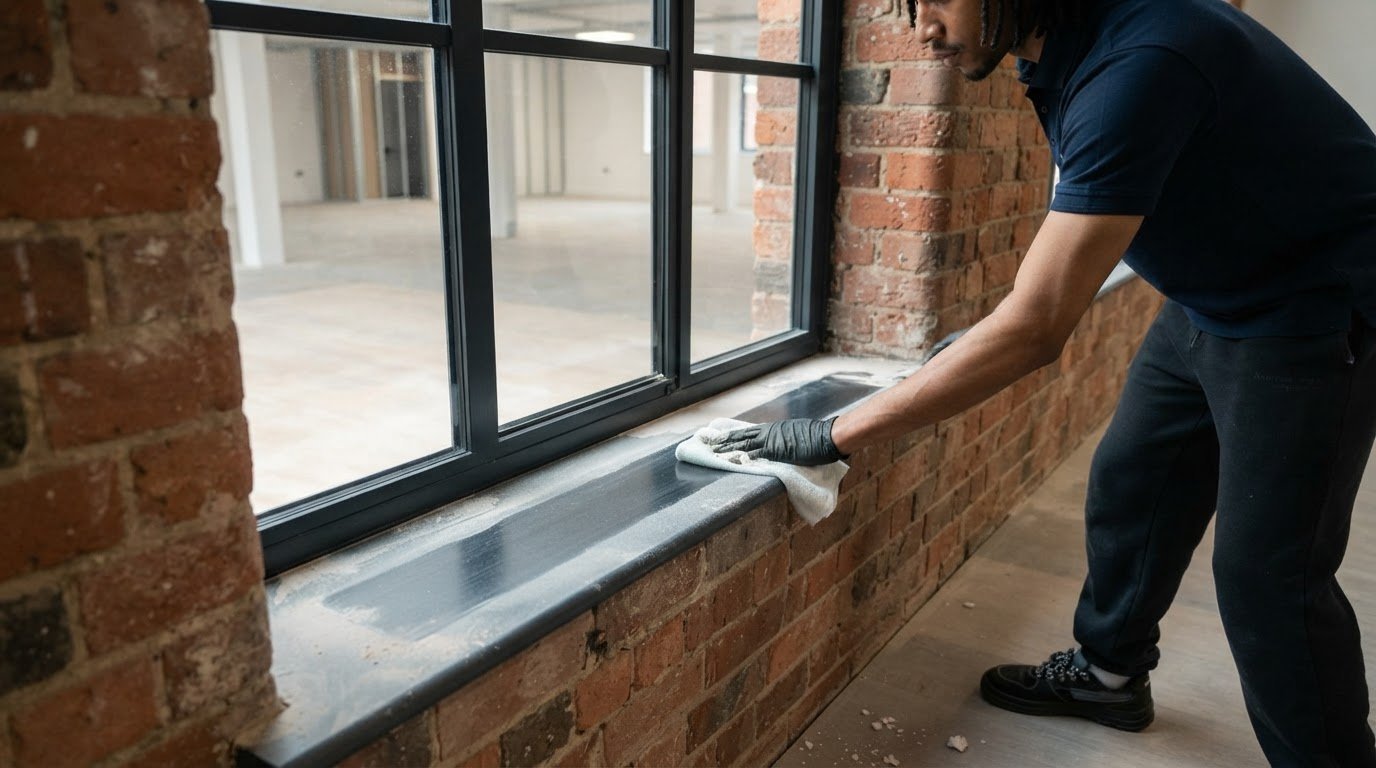

After builders cleaning in Birmingham removes construction dust, debris and residue after building, refurbishment or renovation work, preparing rooms and surfaces for their next use. The agreed scope can include detailed cleaning of kitchens, bathrooms, floors and accessible internal windows.
This service suits property managers, developers, contractors and facilities teams preparing flats, offices, communal areas or other managed premises. The right scope depends on the work completed, the affected areas and whether the property needs a builders clean, re-clean or final sparkle clean before inspection or handover.
This guide explains what the clean can include, which property types it suits and how to plan the scope around the site’s condition, access and required finish.
Key Takeaways
- Identify which tasks belong in a builders clean and when a separate sparkle clean may be needed before handover.
- Understand how construction dust, site conditions and Health and Safety documentation shape the cleaning approach.
- Define the scope around the property type, areas affected, access arrangements and any site assessment.
- See how cleaning priorities differ between residential and commercial spaces, from fixtures and windows to final presentation.
What Is After Builders Cleaning?
After-builders cleaning removes construction dust, loose debris and residue after building or refurbishment work. It prepares a finished property for occupation, inspection or handover. A standard scope may include floors, skirting, boards, accessible internal windows, kitchen surfaces and bathrooms. Cupboards can be cleaned inside when they are empty and accessible.
A refurbished house or flat may need cleaning before residents or new tenants move in. Developers and contractors may arrange a builders clean during project completion, followed by a sparkle clean for final presentation. Property managers can include apartment communal areas affected by the work.
- Builders clean: removes heavier dust and debris after building work.
- Re-clean: addresses dust or marks after fixtures and fittings are installed.
- Sparkle clean: provides a final detailed pass before handover.
Across Birmingham, projects may be in the City Centre, Digbeth, Edgbaston, Aston or Sutton Coldfield. Wider West Midlands coverage includes Solihull, Wolverhampton, Walsall, Dudley, Smethwick and West Bromwich. After-builders cleaning in Birmingham is relevant to homes, managed properties, offices and construction projects, with the cleaning plan reflecting each site’s condition and intended use.
Birmingham has cleaning contractors serving post-build projects, but reviews are specific to each business. Look for detailed comments about dust removal, communication, presentation and handling of concerns, rather than relying on a rating alone.
Before work begins, check what insurance documentation and site procedures are in place. Agree the cleaning scope and record any existing damage or areas requiring special care. If damage occurs, report it promptly and follow the contractor’s claims process.
The service covers Birmingham and the West Midlands; customers nearby can ask the company to confirm availability. When making that enquiry, it can help to describe the property’s location and whether the request concerns a home, managed property, office or construction project. The cleaning plan can then reflect the site’s condition and intended use, while a clear scope and agreed site procedures help establish expectations before the work begins.
Cleaning After Construction, Renovation and DIY Work
Construction, renovation and DIY projects leave different cleaning demands in homes, offices and operational sites. The cleaning specification should match the stage of work and the surfaces affected.
Cleaning After Building Work
A post-work clean addresses dust, debris and marks left by builders and trades. In a renovated office, tasks may include cleaning floors, desks, handles and accessible internal windows. A home extension may need attention to new fixtures and paint splashes. Distinguish completed areas from spaces where work is continuing, so the clean reflects the site’s actual condition.
Dust, Debris and Residue Removal
Construction dust can settle on ledges, skirting boards and fittings, then become airborne again during later work. A cleaning service removes loose dust and debris before treating surface residue. Paint, grout or plaster marks need careful handling, as unsuitable methods can damage finishes. The residue and surface determine the method, and heavy deposits may require specialist products or additional time.
Dust control matters on commercial and industrial sites as well as in homes. The Health and Safety Executive notes that prolonged exposure to construction dust can be hazardous and should be properly managed. Cleaning plans need to account for site activity, access restrictions and areas where trades are still working.
For procurement, Constructionline registration and site-specific Risk Assessment and Method Statements (RAMS) serve different purposes. Registration does not replace RAMS, which set out the cleaning tasks, site hazards and working controls. COSHH documentation supports the safe handling of cleaning substances. These records help facilities teams and site managers coordinate work with other contractors.
Warehouses, offices and industrial units may need agreed access routes and cleaning planned around fixed equipment. The scope should identify operational areas and surfaces requiring attention before inspection or handover.
Builders cleaning focuses on heavy dust and debris; a sparkle clean is a final detailed pass for handover presentation. Builders’ dust can settle for days; a large house can take a full day or more.
Planning the Scope of an After-Builders Clean
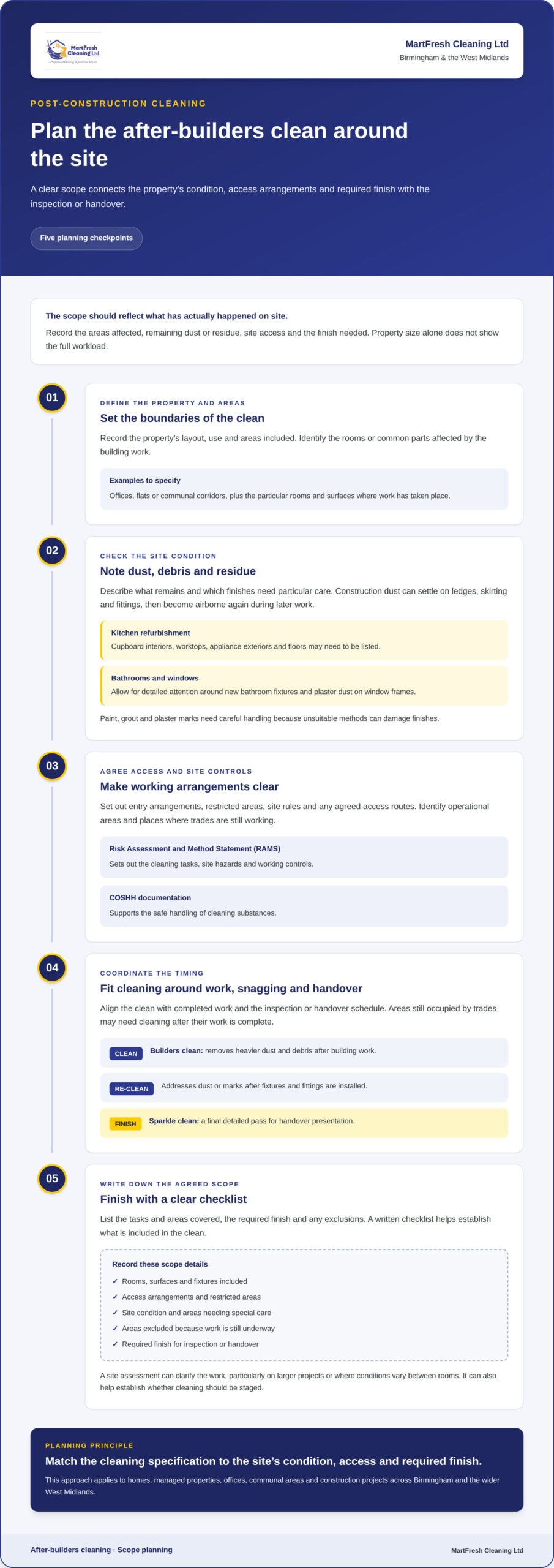
A clear scope lists the rooms, surfaces and fixtures to be cleaned after building work. It should also record access arrangements, site condition and the required finish, helping the cleaning team plan tasks around the inspection or handover schedule.
For example, a kitchen refurbishment may need cupboard interiors, worktops, appliance exteriors and floors cleaned. Bathrooms may need detailed attention around new fixtures, while window frames can collect plaster dust. Identify areas affected by trades and any surfaces needing particular care.
- Property: Record the layout, use and areas included, such as offices or communal corridors.
- Condition: Note remaining dust, debris, paint marks or plaster residue.
- Access: Set out entry arrangements, restricted areas and site rules.
- Timing: Coordinate cleaning with completed work, snagging and handover.
A site assessment can clarify the work, particularly on larger projects or where conditions vary between rooms. It helps establish a practical cleaning specification and whether the work should be staged. Record exclusions clearly: areas still occupied by trades may need cleaning after their work is complete.
A written checklist can define the tasks and areas covered. Property size alone does not show the full workload. The condition of floors, kitchen fittings, bathrooms and window frames also affects the level of detail required. A shared checklist gives site managers and cleaning teams a clear reference.
Short-notice scheduling depends on site access, team availability and whether building work has finished. A ready property with a defined scope is easier to schedule than an active site with changing access or unfinished rooms.
After-Builders Cleaning for Residential and Commercial Properties
Residential and commercial sites collect construction dust in different ways. A flat refurbishment may affect kitchen cupboards, bathroom fittings, skirting and internal windows. An office project can leave dust on desks, partitions, reception surfaces and floor edges. The specification should reflect the property’s use and the areas affected by building work.
In a home or managed flat, cleaners can focus on accessible surfaces, fixtures and finishes before occupation. Window frames and sills often need attention after dusty work. Kitchen worktops, splashbacks, sinks and appliance exteriors may also be included. Cupboard interiors need to be empty and accessible. The scope should distinguish cleaning from snagging or unfinished trades’ work.
Commercial properties need a site-specific approach. An office handover may prioritise reception areas, meeting rooms, work surfaces and internal glazing. A residential block refurbishment may include entrance halls, corridors, lifts and stairwells. Access routes and areas still in use affect how the team can carry out the clean.
Industrial premises bring other considerations, including fixed equipment, operational zones and surfaces that must remain accessible. Set clear boundaries in the scope for cleaning around machinery or active work areas. Where a surface needs specialist treatment, the method should suit its finish and the residue.
For either property type, a builders clean removes heavier dust and debris, while a sparkle clean provides the final detailed presentation pass. Accessible internal windows can be included, particularly after dusty work. The distinction is the required finish: a usable site or a presentation-ready property for inspection and handover.
MartFresh Cleaning Ltd: After-Builders and Post-Construction Cleaning
MartFresh Cleaning Ltd supports property managers, developers, principal contractors and facilities teams preparing completed projects for inspection or handover. Its after-builders and post-construction cleaning covers builders cleans, post-refurbishment work and final presentation cleaning. The agreed scope reflects site condition, access and the required finish.
For example, a developer may schedule a builders clean after trades finish, then arrange a sparkle clean before a handover inspection. A block manager may include communal areas such as entrance halls, corridors, stairwells and lifts.
Landlords and housing providers can arrange an agreed post-construction scope when preparing managed properties for new occupants. For empty properties between tenancies, end-of-tenancy or void cleaning may address additional presentation requirements after building work.
Commercial premises need cleaning planned around operating areas, access restrictions and agreed specifications. Office and commercial cleaning can be arranged around site requirements, frequency and operating hours. For larger projects, a site assessment can help define areas, tasks and quality checks.
MartFresh uses agreed cleaning specifications and task checklists to set expectations. Site inspections, photographic reporting and additional quality checks can be incorporated where required. Health and Safety procedures include risk assessments, method statements and COSHH-related documentation, supporting site-specific arrangements without implying external accreditation.
MartFresh provides cleaning services in Birmingham and the wider West Midlands, including Solihull, Wolverhampton, Walsall, Dudley, West Bromwich, Smethwick, Oldbury, Halesowen, Sutton Coldfield and Coventry. One-off projects and ongoing contracts can be planned around defined cleaning arrangements.
To discuss your project, contact MartFresh Cleaning Ltd.
Frequently Asked Questions
Do you remove paint, grout or plaster marks?
Removing surface residue depends on the mark and the finish beneath it. Heavy paint, grout or plaster may require specialist products or additional time. A mark on newly fitted tiles, for example, needs a different approach from dust on a painted skirting board. Identify these areas in the scope so the cleaning method suits the surface.
What equipment do cleaning teams bring?
Equipment is selected to suit the site and agreed tasks. On a managed office site, the scope may include desks, floors and internal glass, while a refurbished flat may need attention to fittings and kitchen surfaces. Site conditions inform equipment selection.
What does after builders cleaning in Birmingham include?
The agreed tasks depend on the written scope. A project may need dust removed from surfaces, floors cleaned, or kitchen cupboards and bathroom fixtures addressed. The specification should distinguish the builders clean from any later sparkle clean and identify exclusions, such as rooms still occupied by trades or areas awaiting further work.
What factors affect post-construction cleaning in Birmingham?
The cleaning plan depends on the site’s size, condition, access, equipment needs, scope and deadline. A partially occupied office, for example, may require different access coordination from an empty unit. A site assessment helps identify work areas, surfaces and handover requirements, so tasks can be planned with site staff.
How should after-builders cleaning be planned?
Plan cleaning around a defined scope rather than an assumed time allowance. The specification records which rooms, surfaces and tasks are included, helping site staff understand the planned work. A refurbishment with restricted access may need cleaning coordinated by area. Staged work can separate the initial builders clean from the final presentation pass.
How do I choose a reliable after builders cleaning company in Birmingham?
Choose a contractor that documents the scope, access arrangements and cleaning standards. For a commercial project, review its site-specific Risk Assessment and Method Statements (RAMS), COSHH information and insurance documentation. Ask how quality checks and issue reporting fit the agreed arrangement. These records help property managers and site teams coordinate cleaning with handover inspections and other contractors.