


Pricing in the cleaning industry needs a bigger conversation in 2026. Not just about what cleaning companies charge, but why they charge it.
Across the UK, too many cleaning businesses are underpricing their services. Not because they want to deliver poor work, but because pricing decisions are often driven by fear, guesswork, and imitation rather than reality.
The result is an industry under pressure, falling standards, and businesses struggling to survive.
This is not a theoretical issue. It is happening daily across commercial cleaning, end of tenancy cleaning, HMOs, offices, and managed buildings.
Why so many cleaning businesses underprice
In 2026, most underpricing comes from three core issues.
First, copying prices seen online.
Many businesses base pricing on what competitors advertise, without understanding what sits behind those numbers. Online prices rarely reflect full employment costs, compliance, or proper delivery time.
Second, fear of losing work.
Cleaners are often told they are “too expensive” without context. Instead of standing by structured pricing, businesses reduce rates to secure work, even when it puts them at risk.
Third, not fully understanding true costs.
Many cleaning businesses do not calculate the full cost of delivering a compliant, professional service. This leads to prices that look competitive but are unsustainable.
What proper cleaning pricing actually needs to cover
Professional cleaning pricing is not just labour. A realistic cleaning price in 2026 must account for:
- 1. Legal employment costs including National Insurance, pensions, and holiday pay
- 2. Insurance, including public liability and employer’s liability
- 3. Training time and ongoing competency development
- 4. Correct commercial equipment and colour-coded products
- 5. Time required to deliver work properly, not rushed
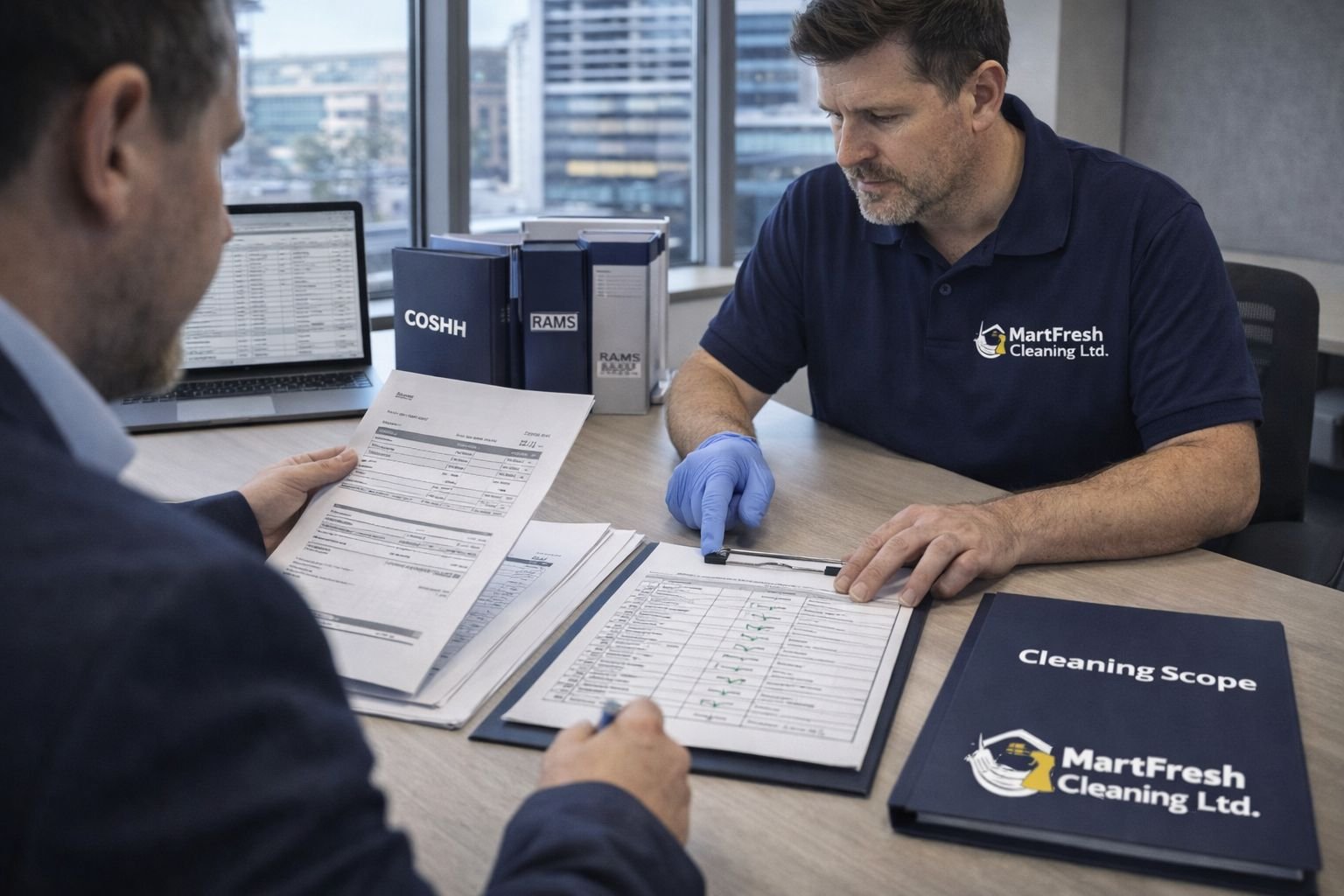
- 6. Health and safety compliance, COSHH, RAMS, and supervision
- 7. Management, quality control, and issue resolution
When pricing ignores these factors, something always gives.
Usually, it is quality, safety, or staff wellbeing.
What the data tells us about underpricing
Industry data shows that labour typically represents 60 to 70 percent of a cleaning contract’s true cost.
Insurance, equipment, chemicals, training, and management often add another 20 to 30 percent. That leaves a narrow margin for reinvestment and sustainability. When a cleaning service is priced significantly below this reality, it often means:
- 1. Staff are underpaid or rushed
- 2. Training is minimal or non-existent
- 3. Corners are cut on equipment or products
- 4. Compliance is treated as paperwork, not practice
- 5. Turnover is high and consistency suffers
These issues eventually surface through complaints, failed inspections, and contract loss.
Why underpricing damages the entire industry
Underpricing does not just hurt one business.
It resets client expectations to unrealistic levels.
It makes professional operators look expensive when they are simply compliant.
It pushes standards down across offices, HMOs, and managed buildings.
Over time, this creates a race to the bottom where nobody wins.
- – Clients receive inconsistent service.
– Cleaners burn out or leave the industry.
– Reputable businesses struggle to scale sustainably.
Why fair pricing raises standards
Structured, realistic pricing allows cleaning businesses to:
- 1. Pay staff properly and retain experienced cleaners
- 2. Invest in training, supervision, and quality control
- 3. Deliver consistent results across every site
- 4. Operate legally and safely without shortcuts
- 5. Build long-term relationships rather than reactive contracts
This is not about charging the most.
It is about charging what is required to do the job properly.
Why this conversation matters now
In 2026, commercial cleaning is no longer a background service.
It affects health, inspections, tenant satisfaction, ESG reporting, and operational risk. Pricing that ignores reality undermines all of this.
Raising standards starts with honest conversations about cost, value, and responsibility.
That is why spaces like The Cleaning Clinic matter. They allow open discussion about pricing, compliance, systems, and sustainability without fear or posturing.
When cleaning businesses are supported to operate properly, everyone benefits.
Clients. Staff. Buildings. And the industry as a whole.