


Based on operational experience across Birmingham and the West Midlands.
By MartFresh Cleaning Ltd
The problem most communal cleaning contracts start with
Communal cleaning in HMOs and residential blocks often fails for one simple reason:
maintenance cleaning is introduced without first resetting the condition of the space.
Across Birmingham and the West Midlands, we see the same pattern repeatedly. A contractor is appointed, weekly or bi-weekly cleans begin. At first, things appear acceptable, then complaints slowly follow — floors never quite look right, odours return quickly, and standards seem to slip even though cleaners are attending as agreed.
This is rarely a staffing issue. It is a structural one. Maintenance cleaning is being asked to fix problems it was never designed to solve.
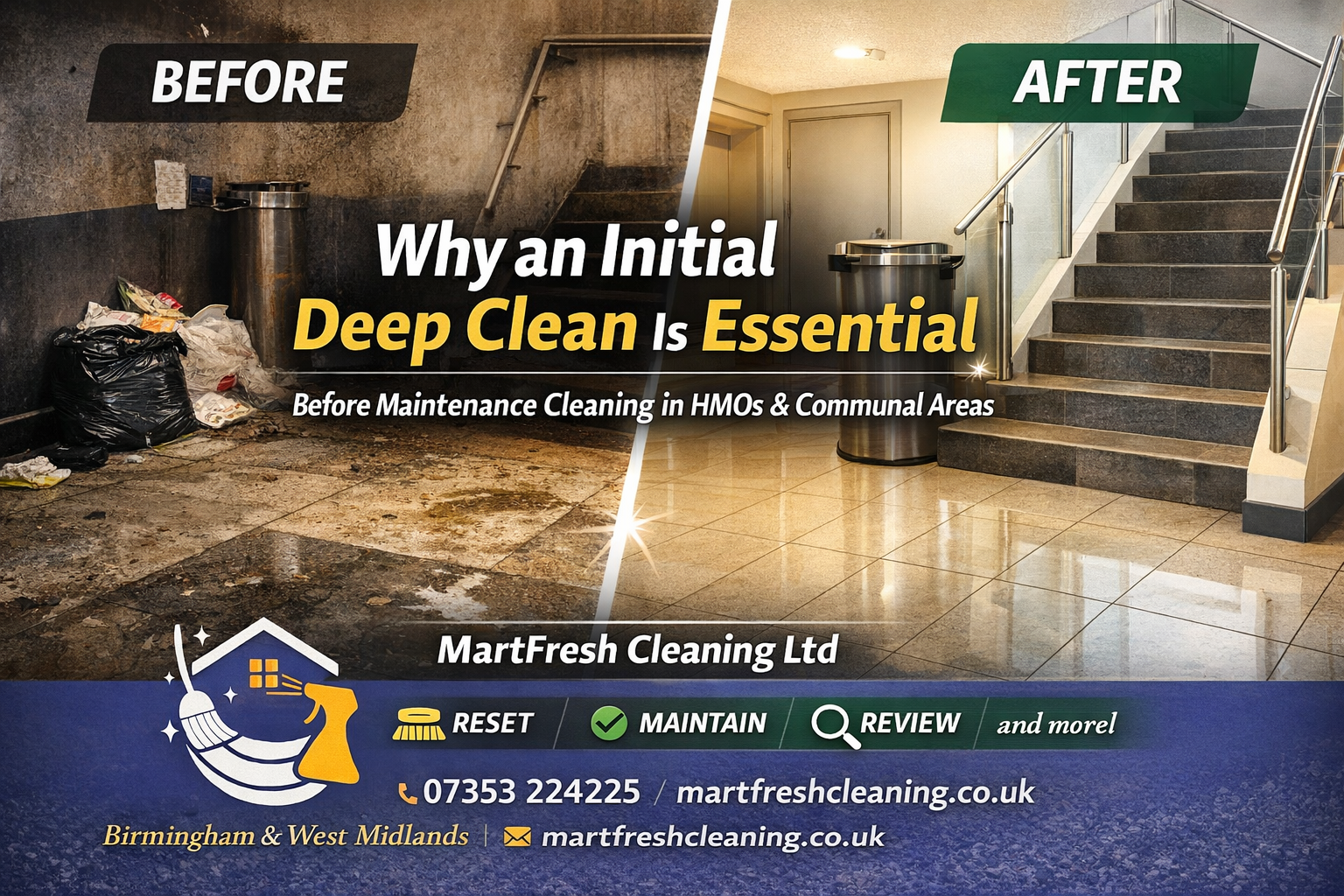
This article explains why an initial deep clean is essential before any maintenance cleaning in HMOs and communal areas — and what happens when that reset is skipped.
Why communal cleaning breaks down over time
HMOs and shared residential buildings experience levels of use that domestic spaces simply do not. In Birmingham HMOs, it is common to see:
- – Constant foot traffic through the same corridors and stairwells
- – Shared kitchens and bathrooms used by multiple occupants daily
- – Higher moisture, grease, and wear
- – Inconsistent tenant behaviour and care standards
At the start of a contract, routine cleaning can make spaces look acceptable. Surfaces are wiped, bins emptied, floors mopped or vacuumed. But over time, deeper issues emerge:
- – Embedded dirt in flooring and grout
- – Grease build-up on kitchen units and splashbacks
- – Wear-related staining that routine cleaning cannot remove
- – Odours returning shortly after visits
Once these conditions exist beneath the surface, maintenance cleaning can only slow deterioration — not reverse it.
This is where many communal cleaning contracts begin to fail.
Deep cleaning vs maintenance cleaning (and why the difference matters)
The difference between deep cleaning and maintenance cleaning is often misunderstood. Deep cleaning is restorative and its role is to reset the condition of a space.
In communal and HMO environments, this typically includes:
- – Intensive or mechanical floor cleaning
- – Removal of built-up grease, scale, and ingrained dirt
- – Detailed cleaning of edges, skirting, corners, and touchpoints
- – Addressing areas that cannot be resolved within routine visit times
Maintenance cleaning is preservative.
Its purpose is to keep a space at an agreed standard once it has been reset. Maintenance cleaning assumes:
- – Surfaces are already in a maintainable condition
- – Time allocations are realistic for upkeep, not restoration
- – Cleaners are preventing decline, not correcting historic neglect
Using maintenance cleaning to compensate for the absence of a deep clean creates unrealistic expectations and puts unfair pressure on cleaners — no matter how diligent they are.
Why HMOs need a reset before maintenance begins
HMOs are not static environments. Occupancy changes, wear increases, and small issues compound quickly. An initial deep clean does three critical things:
- – Establishes a clear baseline condition
- – Defines what “clean” actually looks like for that property
- – Allows maintenance cleaning to be scoped realistically
Without this reset:
- – Cleaners are judged against standards they cannot achieve within allocated time
- – Property managers receive valid complaints that are structurally unavoidable
- – Relationships become reactive rather than operationally stable
For HMO cleaning in Birmingham and block communal cleaning, a reset is not an upsell.
It is a prerequisite for consistency.
What happens when the reset is skipped
When a deep clean is skipped at onboarding, the same sequence tends to follow:
First, maintenance appears sufficient. Early visits mask underlying issues.
Then, wear overtakes effort. Footfall dulls floors, staining becomes permanent, and grime embeds.
Next, complaints increase. Not because cleaners stop working, but because maintenance cleaning is being asked to do restorative work.
Finally, operational strain builds. Cleaners rush, corners feel missed, supervision increases, and trust erodes.
At this stage, the choice is unavoidable: reset standards properly or accept that the contract is unsustainable.
A real HMO example from Birmingham
The following example is anonymised but based on a real MartFresh contract.
Client profile
- – Supported housing / HMO provider
- – Eight HMOs across Birmingham
- – Weekly communal cleans on fixed schedules
Initial setup
No deep clean was requested at onboarding. Maintenance cleaning was scoped at one hour per property.
What happened
For several months, the service appeared acceptable. Then complaints increased, focusing on floors, wear-related staining, and perceived missed areas.
Root causes identified
- – No initial reset clean
- – One hour per visit was no longer realistic
- – Maintenance cleaning was expected to correct long-term wear
Outcome
MartFresh advised a one-off deep clean across all sites and revised visit durations. The client was given a clear choice: reset standards properly or continue managing complaints.
This decision point is common in property management cleaning services in Birmingham. The difference lies in addressing it early.
How to scope communal cleaning properly
Effective communal cleaning follows a simple framework: Reset → Maintain → Review
Reset with a deep clean that removes historic build-up
Maintain with visit lengths aligned to usage and condition
Review regularly as occupancy and wear change
There is no universal “one hour” solution.
Time must reflect reality.
Practical checklist for landlords and managers
Before appointing or reviewing a communal cleaning contract, ask:
- – Has a deep clean been completed recently?
- – Are visit times based on condition or legacy pricing?
- – Are expectations aligned with scope?
- – Is evidence provided after each visit?
- – Are complaints rising despite consistent attendance?
If multiple answers raise concern, a reset is likely overdue.
Final thoughts: setting standards that actually last
Communal area cleaning is not domestic cleaning. It is a managed service that must account for use, wear, and realistic delivery.
In commercial cleaning across Birmingham, the contracts that succeed long-term are built on honest scoping, proper resets, and regular reviews.
Skipping the reset does not save money. It delays problems and increases friction.
Request a scope review
If you manage HMOs or residential blocks in Birmingham or the West Midlands and want a realistic assessment of your communal cleaning setup, we’re happy to review it.
MartFresh Cleaning Ltd
Commercial and communal cleaning
Birmingham & West Midlands
📞 07353 224225
📧 info@martfreshcleaning.co.uk
🌐 martfreshcleaning.co.uk