


Most people notice dirty floors or smudged doors. Very few notice the air they breathe in corridors, offices, HMOs or student blocks. A space can look clean but still feel heavy, stale or uncomfortable. When you manage buildings with shared occupancy, the air matters as much as the surfaces. Your tenants and staff feel the difference even if they don’t say it.
Why air quality now matters in buildings you manage
People spend most of their time indoors. This makes indoor air quality a real part of building performance, not an abstract idea. Poor workplace air quality links with headaches, tiredness and slower thinking. In offices it affects concentration. In HMOs and student accommodation it affects comfort and complaints. In communal areas it shapes first impressions.
Expectations have shifted. Student accommodation teams talk about wellbeing. Build to rent operators measure resident experience carefully. Housing teams focus on issues that drive complaints, such as moisture, odours and poor ventilation. Employers want working conditions that reduce sickness absence.
In Birmingham and other UK cities, you see the same patterns. Small offices with closed windows. Converted HMOs with busy kitchens. Student cluster flats with constant cooking. Corridors that trap moisture from showers. These are everyday situations where indoor air quality declines quietly over time.
The three main ways air gets “dirty” in your buildings
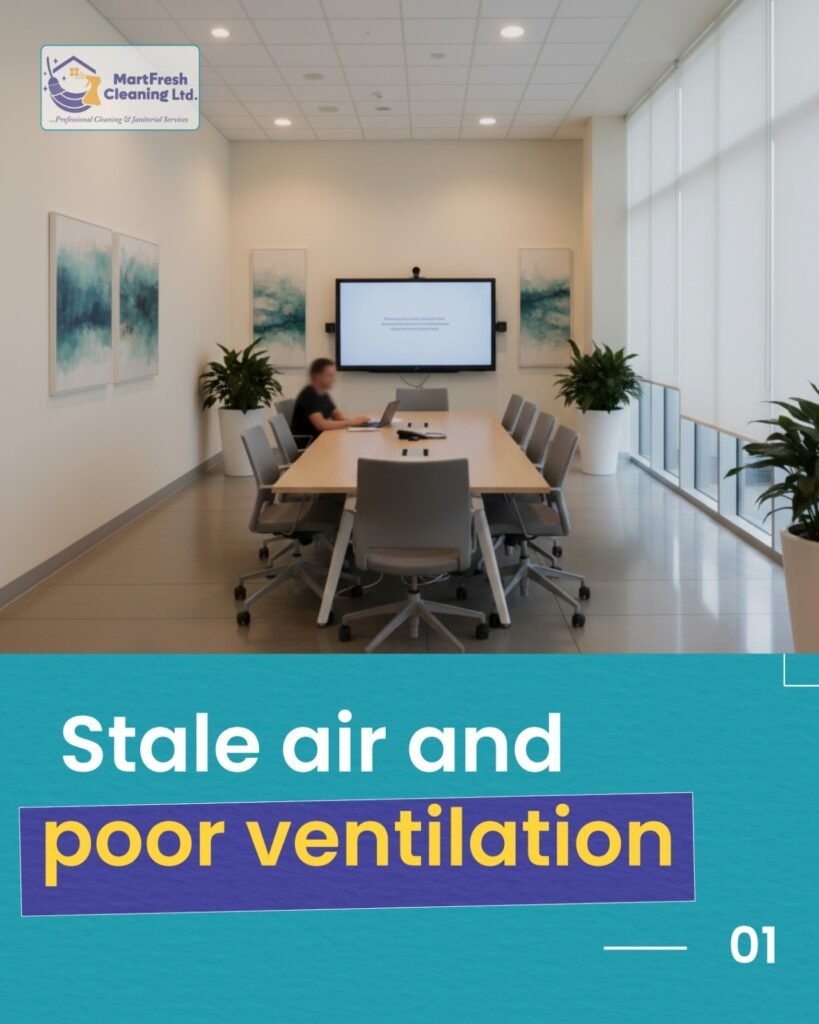
A. Stale air and CO2 build up
Small meeting rooms, study rooms, cluster flats and enclosed offices often have poor ventilation. CO2 levels rise when people stay in the space for hours. Even without scientific measurements, you can feel it. People get sluggish in the afternoon. They describe rooms as heavy or “close”. In HMOs and student blocks, internal corridors with closed windows trap this stale air. Ventilation becomes weak, especially when extractors are blocked or under maintained.
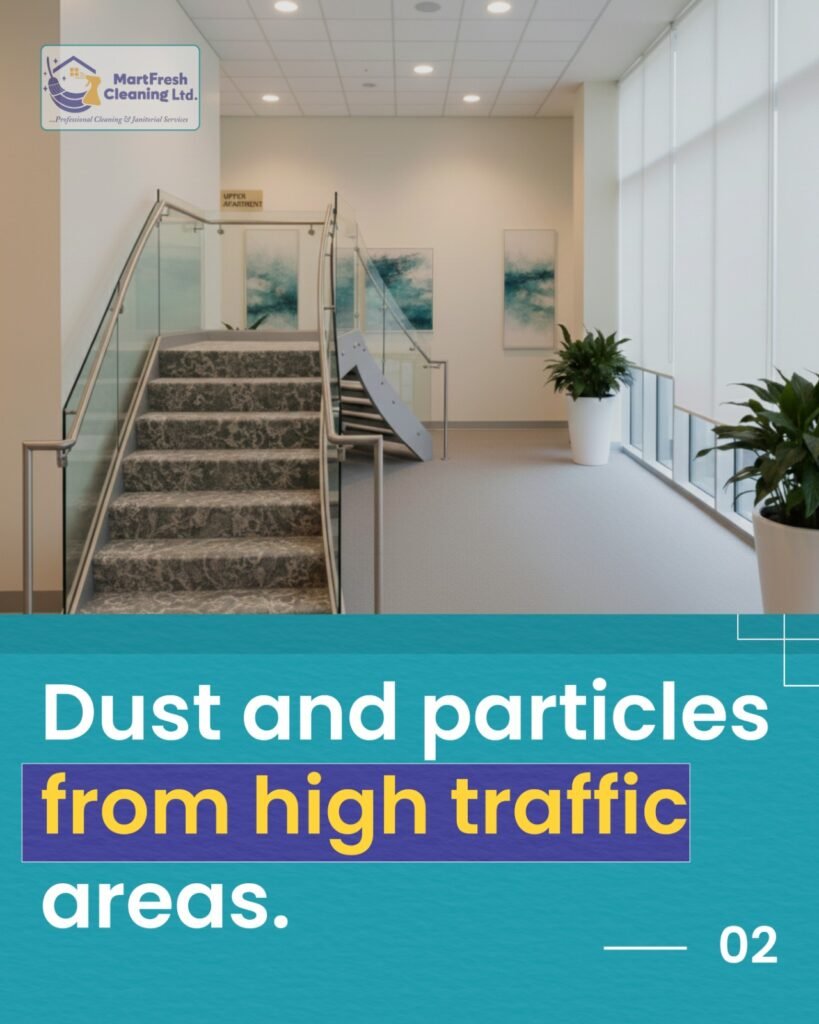
B. Particles and dust
Dust collects quickly in high traffic buildings. Carpets, soft furnishings and high touch areas hold more than people expect. Stairwells in HMOs, entrance mats in student blocks and shared lounges in offices are common hotspots. Dust becomes airborne each time doors shut, people move or cleaners use vacuums without proper filtration. If vacuuming is infrequent or poorly executed, the dust returns to the air immediately. This affects indoor air quality in offices and HMOs, even if surfaces look clean.
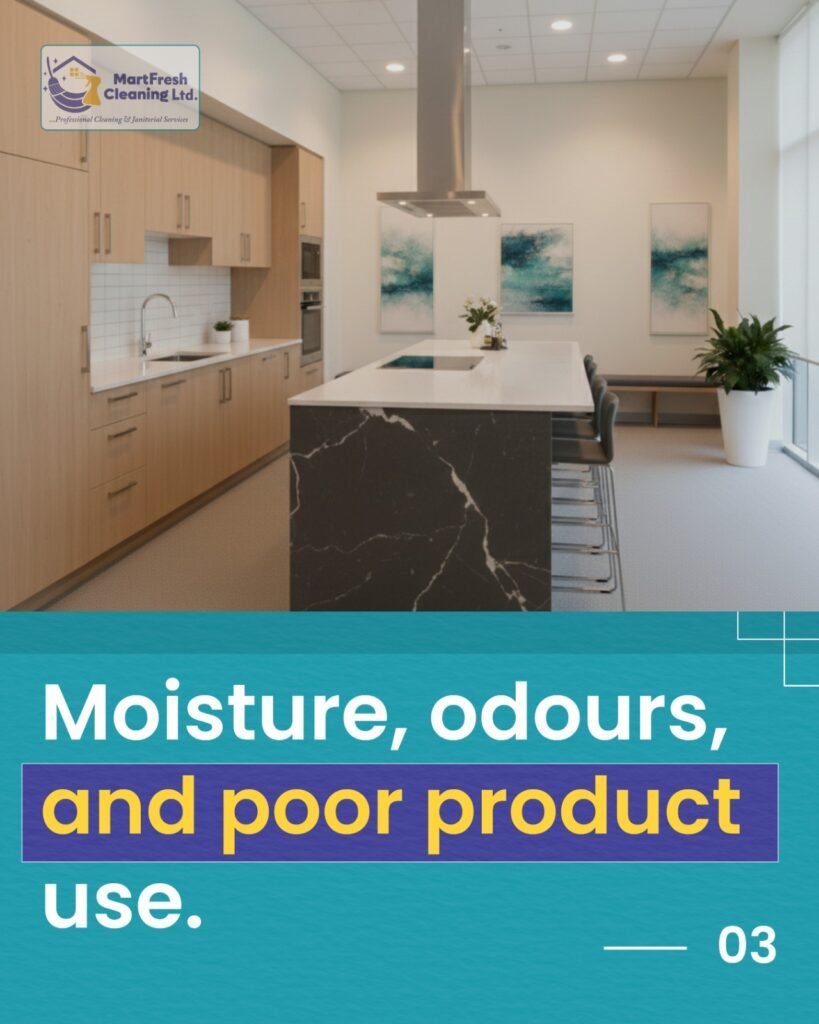
C. Moisture, odours and cleaning chemicals
Moisture is a major contributor in shared buildings. Bathrooms with weak extraction collect steam. Kitchens hold cooking smells long after meals. Communal microwaves, ovens and fridges hold hidden odours. Overuse of strong products in small spaces causes harsh chemical smells. These can linger for hours and affect comfort for tenants and staff. These issues are common in Birmingham HMOs, student accommodation blocks and older office buildings.
What regulators and standards are moving toward
Indoor air quality is gaining more attention in UK guidance and health discussions. You see references to fine particles such as PM2.5. You see early proposals such as the Clean Air (Human Rights) Bill. Large FM providers talk about air quality as part of building wellbeing.
Mitie’s public commentary on the subject suggests a shift in expectations, where tenants and employees will soon look for cleaner air, not just clean desks. This direction affects every operator, from student accommodation teams to commercial landlords.
This is not about complex regulations. It is a sign that air quality will become part of everyday building management in the coming years.
How cleaning practice affects air, not just surfaces
Cleaning decisions influence indoor air more than people realise. Day to day practices shape how fresh or stale a building feels.
Correct vacuuming on carpets and stairs improves air quality. Vacuums with proper filters remove fine dust instead of pushing it back into circulation. Regular filter maintenance matters in HMOs, offices and student blocks.
Consistent degreasing in communal kitchens improves airflow. When extractor fans and vents are coated in grease, they trap odours and moisture. Clean ventilation helps kitchens stay fresh.
Limescale and mould control in bathrooms reduces spores and moisture smells. Many complaints in shared buildings start in bathrooms where extraction is weak and cleaning is inconsistent.
Good product choice and correct dilution reduce strong chemical smells. Overuse of harsh products in small rooms creates discomfort and poor air. A clear product plan prevents this.
Regular cleaning in high traffic areas helps communal spaces breathe better. When stairwells, corridors and lounges are vacuumed and wiped down properly, the building feels fresher. Tenants and staff notice the difference.
These practical steps apply across HMO cleaning, student accommodation cleaning, commercial cleaning and cleaning services in Birmingham for mixed use buildings.
Practical checklist for Facilities and Property Managers
Part 1, Quick wins in the next 30 days
- Walk each building and note where air feels heavy or smells stale.
- Check if stairwells, corridors and common rooms follow a real vacuum schedule, not an informal one.
- Review how cleaners store and use chemicals in small areas.
- Check if extraction fans are clean and working in bathrooms and kitchens.
- Ask tenants or staff one question, “Does any part of the building feel stuffy or smell bad regularly”
Part 2, Medium term improvements
- Align cleaning specifications with air quality outcomes as well as visible standards.
- Build simple photo and checklist reporting into every clean.
- Coordinate cleaning tasks with ventilation and maintenance routines.
- Include air quality when you next review cleaning specifications for offices, HMOs or student accommodation.
- Review how often carpets, mats and soft furnishings receive proper vacuuming and spot cleaning.
How MartFresh Cleaning can support you
MartFresh Cleaning Ltd works with property and FM teams across Birmingham and the West Midlands. We focus on compliance, consistency and building comfort.
We use RAMS, COSHH, SDS and method statements for all cleaning services. We are working toward SSIP accreditation. This gives you reassurance that cleaning is part of a safe and structured process.
We help you improve building comfort through practical steps. Fewer odours in communal kitchens. Cleaner stairwells. Better moisture control in bathrooms. A more consistent feel across shared spaces. We do this through clear checklists, trained cleaners and routine photo evidence on each visit.
Our services support indoor air quality in offices, HMOs and student buildings. These include communal area cleaning, student accommodation cleaning, HMO cleaning, commercial cleaning, end of tenancy cleaning, deep cleaning and Airbnb and serviced accommodation turnarounds in Birmingham and West Midlands.
We work as a partner, not only a provider. We align our tasks with your operational needs so your buildings stay clean, safe and easier to manage.
If you want a fresh set of eyes on one HMO, block or student building in Birmingham, arrange a short site walk.
Or send your current cleaning specification and we will suggest clear, practical improvements that support better air and better building comfort.