


A cleaning contract is dependable when health and safety controls are built into the service. For property and facilities professionals considering contract cleaning in Birmingham, the agreement should define tasks, frequency, site-specific procedures and how work will be monitored, with a scope that reflects the building’s use.
Offices, managed buildings and other workplaces have different access arrangements, operating hours and cleaning priorities. A clear specification and documented procedures help you assess whether a service can support a hygienic, presentable workplace and prepare it for inspections.
This article explains how to specify office cleaning, account for different workplace requirements and select a contract cleaning service in Birmingham. It covers how site assessments, checklists, supervision and reporting can support consistent delivery and contractor management.
Key Takeaways
- Define the cleaning scope around your site’s layout, use and agreed priorities so expectations are clear from the outset.
- Set cleaning tasks and frequencies to suit workplace operations, access arrangements and the standards each area needs.
- Use a site assessment, written specification and quality checks to make contractor performance easier to manage.
- Review safety documentation, reporting arrangements and communication processes as part of your contract management.
What does contract cleaning in Birmingham include?
Contract cleaning in Birmingham sets out recurring tasks, cleaning frequency and operating arrangements for a workplace. A Colmore Row office, for example, may need a different schedule from a commercial site in Digbeth.
Office cleaning contracts
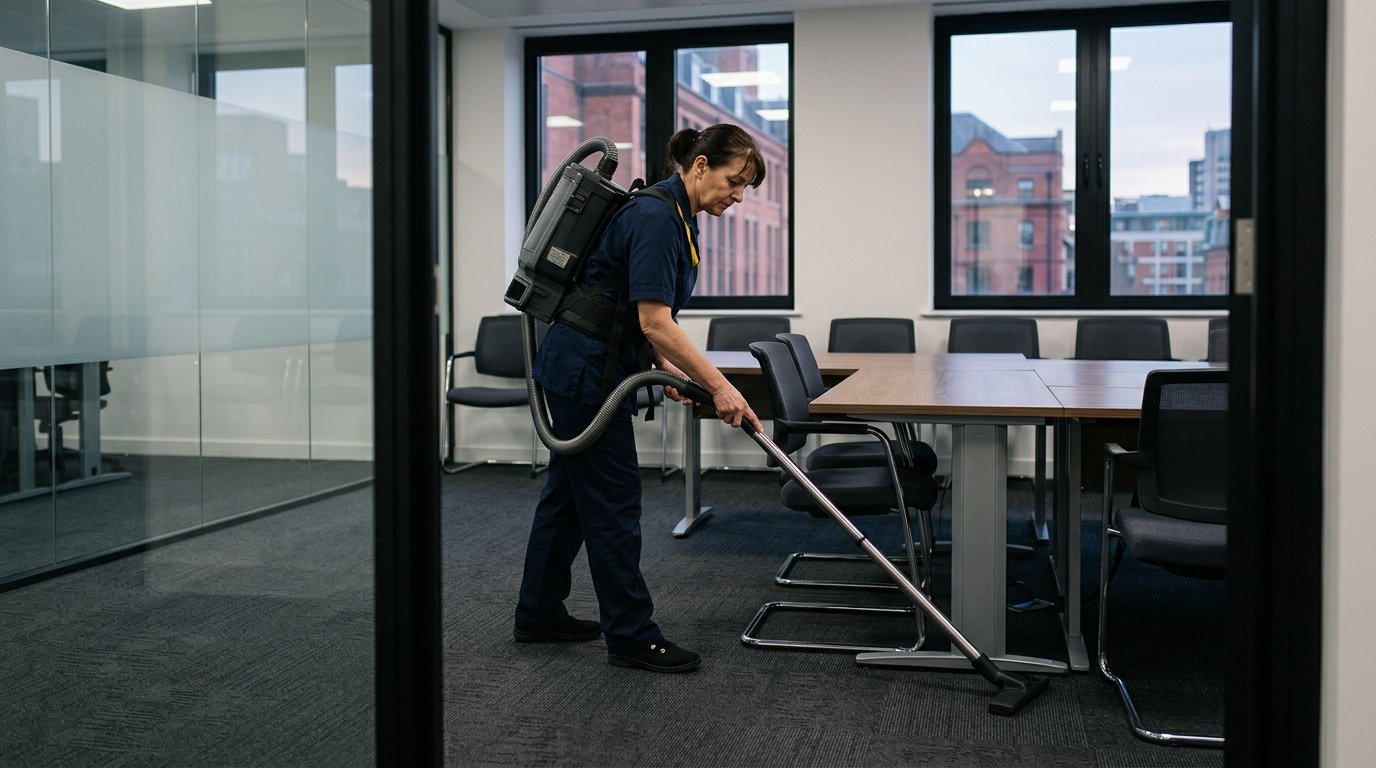
An office cleaning contract defines the areas included, the tasks to be completed and when visits take place. The scope might cover reception desks, work areas, meeting rooms, kitchens, washrooms and floors, with tasks agreed for each space. Check access arrangements, operating hours and frequency too, so cleaning maintains presentation without disrupting staff or visitors.
A clear cleaning specification turns expectations into a practical checklist. It can distinguish routine desk-area cleaning from periodic attention to less frequently used meeting rooms. The schedule should reflect how the office operates, rather than applying the same task list to every site.
Commercial cleaning services
Commercial cleaning can be arranged around a building’s use, layout and agreed scope. In a Birmingham workplace, this may mean setting separate tasks for entrances, circulation areas, shared facilities and staff spaces. A tailored specification identifies the areas covered and how completed work will be assessed.
Commercial contract cleaning also needs clear arrangements for communication and site changes. A facilities manager can use a written schedule to record access instructions, cleaning priorities and agreed variations. This keeps cleaning services in Birmingham aligned with the building’s operational requirements.
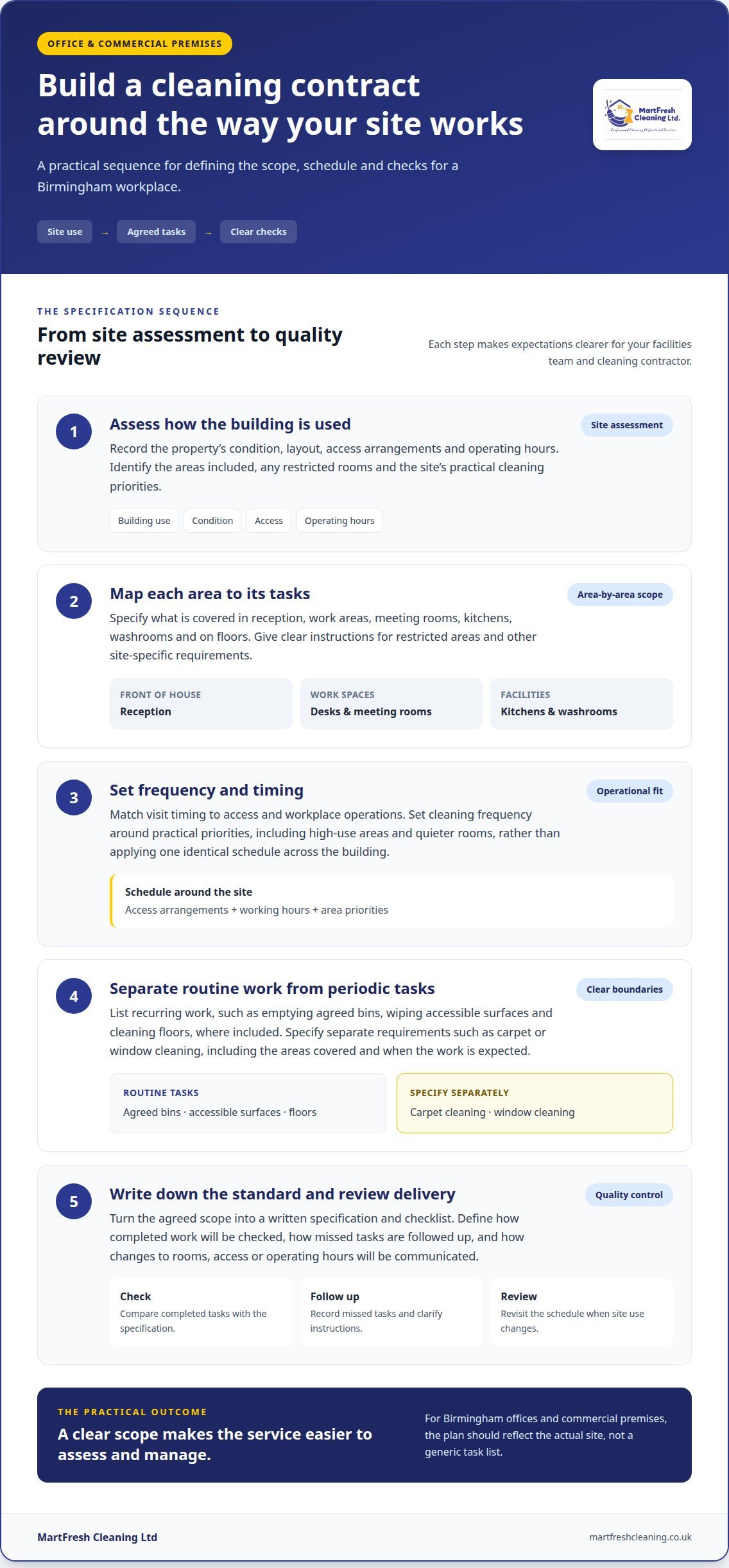
Before a contract begins, the site assessment helps establish the scope, condition, access arrangements and required frequency. Those details support a realistic plan for commercial and office contract cleaning, with responsibilities and standards recorded in the specification. A strict, task-based checklist can then help clarify what each visit is expected to cover. For a closer look at the service scope, see commercial cleaning services.
Contract cleaning for offices and commercial premises
Office cleaning schedules should match how each workplace operates. In a Birmingham city-centre office, reception, meeting rooms and staff kitchens may need different tasks and frequencies. Map each area to an agreed checklist, then schedule visits around access and working hours. This gives cleaning staff a consistent sequence and makes omissions easier to spot.
Site use also shapes the specification. A medical centre, school or warehouse may have different access, activity and cleaning priorities, which is why a standard office schedule may not suit every premises. Define the actual site’s areas and tasks, including restricted rooms and operational periods, and give cleaning staff clear instructions before work begins.
A practical office cleaning process starts with a site assessment, followed by a written scope and schedule. Specify routine tasks, such as emptying agreed bins, wiping accessible surfaces and cleaning floors, where these are included in the contract. Record how work will be checked and how changes to rooms, access or operating hours will be communicated. For Birmingham premises, clear arrangements support consistent presentation from visit to visit.
Separate recurring tasks from periodic work. Carpet cleaning, for example, can be listed as a distinct requirement rather than assumed to be part of routine floor care. Define window cleaning separately if required, including the areas covered and when the work is expected. This prevents differing interpretations of what the contract includes.
Before agreeing a schedule, identify high-use areas, quieter rooms and any site-specific instructions. A facilities manager can then match cleaning frequency to practical priorities, rather than applying the same checklist throughout the building. To discuss a workplace scope, outline your office cleaning requirements.
How to assess a contract cleaning arrangement
The scope, property condition, access arrangements and service frequency all shape a commercial cleaning contract. A site assessment helps facilities professionals define these factors before agreeing the cleaning specification.
Bespoke plans and site visits
A site visit should establish how the building is used, which areas are included and where access is controlled. For a Birmingham office, note reception, meeting rooms, washrooms and restricted areas. A cleaning company can use these details to shape a site-specific plan, assign clear tasks and set communication routes for facilities contacts.
Site assessments and cleaning requirements
An assessment records the property’s condition, access arrangements, service frequency and requested scope. Each factor affects the work required: a larger area, limited access, heavier use or additional tasks can change the plan. The cleaning specification should connect the agreed service to these details, so you can judge whether it reflects the site’s actual requirements.
Inspections and quality control
Site inspections compare completed tasks with the agreed specification. A checklist can record whether floors, washrooms and reception areas meet the stated standard, while flagging missed tasks for follow-up. Facilities teams can use findings to identify recurring issues, clarify instructions and review whether the schedule still suits the building as its use changes.
Site surveys and service scope
A site survey gives a cleaning company the practical information needed to define the service requirements. The property, required scope, condition, access arrangements and service frequency all inform the proposed work. Clear communication during the survey helps resolve questions about included areas and priorities. You can then assess the proposed service against the written specification, rather than relying on a general description.
Cleaning contractor management, safety and reporting
Commercial cleaning services in Birmingham and the wider West Midlands vary according to sector and site. A clear contract, documented procedures and regular performance reviews help you manage the arrangement.
Accreditations and management systems
Review the contractor’s safety documentation and management processes rather than relying on an accreditation name alone. A workplace cleaning arrangement may need a site-specific risk assessment, method statement and COSHH information for cleaning products. Agree how incidents, missed tasks and access changes will be reported, and who will receive updates.
Contract terms and cancellation
A commercial cleaning contract should record the scope, frequency, agreed standards, access arrangements, reporting process and each party’s responsibilities. It should also state its duration and cancellation terms, including how notice must be given. These terms depend on the agreement, so check the written contract for the applicable notice period and steps for ending the service.
Weak contractor oversight can lead to unclear responsibilities, inconsistent cleaning and gaps in safety documentation. Check that the agreed scope, reporting process and site controls are covered, rather than relying on the quotation alone.
When an organisation employs cleaning staff directly, responsibilities for supervision, training and task records should be clear. If bins or recycling points are within the agreed scope, record the tasks included and how completion will be reported.
Proactive contract management uses regular communication and quality reviews to address issues before they recur. Discuss your contract cleaning requirements for a Birmingham workplace.
MartFresh Cleaning Ltd contract cleaning services
MartFresh Cleaning Ltd provides contract cleaning for Birmingham offices and commercial premises. Its arrangements support property managers and facilities teams who need an agreed scope, scheduled work and clear accountability. Contracts can cover ongoing cleaning or a defined one-off project. For larger contracts or specialist requirements, a site assessment can help establish the work, access arrangements and service frequency.
For offices, a written cleaning specification and task checklist set out covered areas, expected standards and routine duties. Site inspections, additional quality checks and photo reporting can be included where required. These arrangements give property and facilities professionals a practical way to review delivery and communicate issues.
Communal area cleaning can cover agreed spaces such as entrance halls, corridors, staircases, lifts, shared facilities and bin stores. Defining the common parts helps block managers set clear responsibilities. End-of-tenancy and void cleaning supports landlords, housing providers and property managers preparing homes for new occupants, with the scope shaped by the property and its condition.
For construction and refurbishment projects, services include builders cleans, post-refurbishment cleaning and final sparkle cleans before inspections or handovers. A defined scope and access plan help align tasks with project requirements. MartFresh uses agreed specifications and checklists to set expectations and support quality control.
Health and safety documentation includes risk assessments, method statements and COSHH information. MartFresh maintains business insurance and supplier compliance documentation for commercial and property management work. Cleaner selection considers relevant experience, reliability, site suitability and applicable DBS requirements.
Contact MartFresh Cleaning Ltd to discuss your site requirements and cleaning scope.
Set your next cleaning contract in motion
Start by turning site priorities into a workable brief. Identify the areas requiring attention, the standards they must meet and any operational constraints that could affect delivery. This gives your facilities team a clear starting point for planning contract cleaning in Birmingham around the workplace.
MartFresh Cleaning Ltd works with the practical requirements of managed properties and commercial sites. Its site-specific approach helps property professionals shape requirements around the building and its intended use, rather than relying on a generic scope.
Set out your priorities and the type of arrangement you need, then discuss the next steps with the team. Contact MartFresh Cleaning Ltd to discuss your site requirements and move towards a clear, accountable arrangement.
Frequently Asked Questions
What health and safety practices should a cleaning contractor follow?
Agree site-specific instructions before cleaning begins. Set out access controls, alarm procedures, emergency routes and any rooms that require permission to enter. Tell the cleaning company about changes, such as temporary building works or restricted access. Clear procedures help cleaning staff work safely without disrupting the workplace, and give your facilities contact a defined route for reporting hazards or incidents.
What contract lengths do you offer?
Contract length depends on the arrangement for your site. The written agreement should state its start date, duration, review points and how either party can give notice. For a defined project, such as a handover clean, record the scope and completion requirements. For recurring work, document how changes to the schedule or service can be agreed during the contract.
What insurance details should a commercial cleaning agreement record?
Record the relevant policy types, cover limits, insured activities, exclusions and policy period. These details help your organisation assess whether the documented cover aligns with the work and site requirements. Keep the current insurance schedule with procurement or supplier records, and note when updated documentation is due. The contract should also identify who handles insurance queries if the scope changes.
How do you define what is included in contract cleaning?
Use a written scope that identifies covered areas, tasks, frequency and exclusions. Separate routine duties from work requiring a distinct instruction, such as a one-off clean before a handover. Record how additional requests are authorised and documented. This gives your property or facilities team a clear reference if building use changes or someone requests work outside the agreed arrangement.
What information should I prepare before discussing a cleaning contract?
Prepare the site address, a description of the premises and the areas to be cleaned. Note access arrangements, operating hours, priority rooms, deadlines and any restrictions that could affect delivery. If the site includes several buildings, identify each separately. This information helps structure the initial discussion and establish what further detail is needed to define the service brief.
How often should offices, schools and commercial premises be cleaned?
Set the frequency according to actual use, then review it when conditions change. Changes in occupancy, newly opened rooms or repeated feedback about an area may indicate that the schedule needs adjusting. Record the reason for each change and its effect on presentation. This helps your team distinguish a temporary change from a lasting service requirement.
[…] and specialist deep cleans, such as carpet steam cleaning or high-level dusting. Establishing a fixed Scope of Works prevents contractual ambiguity and ensures every clean is compliance-led. It provides a documented […]