


The scope of end-of-tenancy cleaning in Coventry depends on the property’s size, condition, access and required tasks. For landlords, the useful starting point is the required handover standard, not a generic checklist.
That reflects a practical planning issue for property professionals, because a routine changeover and a property requiring more detailed attention can involve different tasks. An agreed cleaning specification helps you plan the turnaround with fewer uncertainties.
This article explains how to define the scope and which areas a professional clean can cover, including rooms, kitchens and bathrooms, carpets, ovens and mould-affected areas. It also shows how an agreed cleaning specification can clarify expectations for landlords, letting agents and property managers and support an inspection-ready handover for the next occupant.
Key Takeaways
- Set the cleaning scope and access arrangements before booking so the handover can be planned clearly.
- Specify whether carpets, ovens and mould-affected areas need attention as part of the clean.
- Use a room-by-room checklist to make kitchen, bathroom and appliance requirements clear.
- Keep check-in and check-out records to help distinguish cleaning needs from fair wear and tear.
Booking an End-of-Tenancy Clean in Coventry
For landlords arranging end-of-tenancy cleaning in Coventry, compare providers by written scope, access arrangements and inspection requirements. Check whether cupboards, internal windows, appliances and requested carpet cleaning are covered. This lets letting agents assess proposals against each rental property’s handover needs. A consistent list of tasks also makes the comparison more useful than relying on general service descriptions.
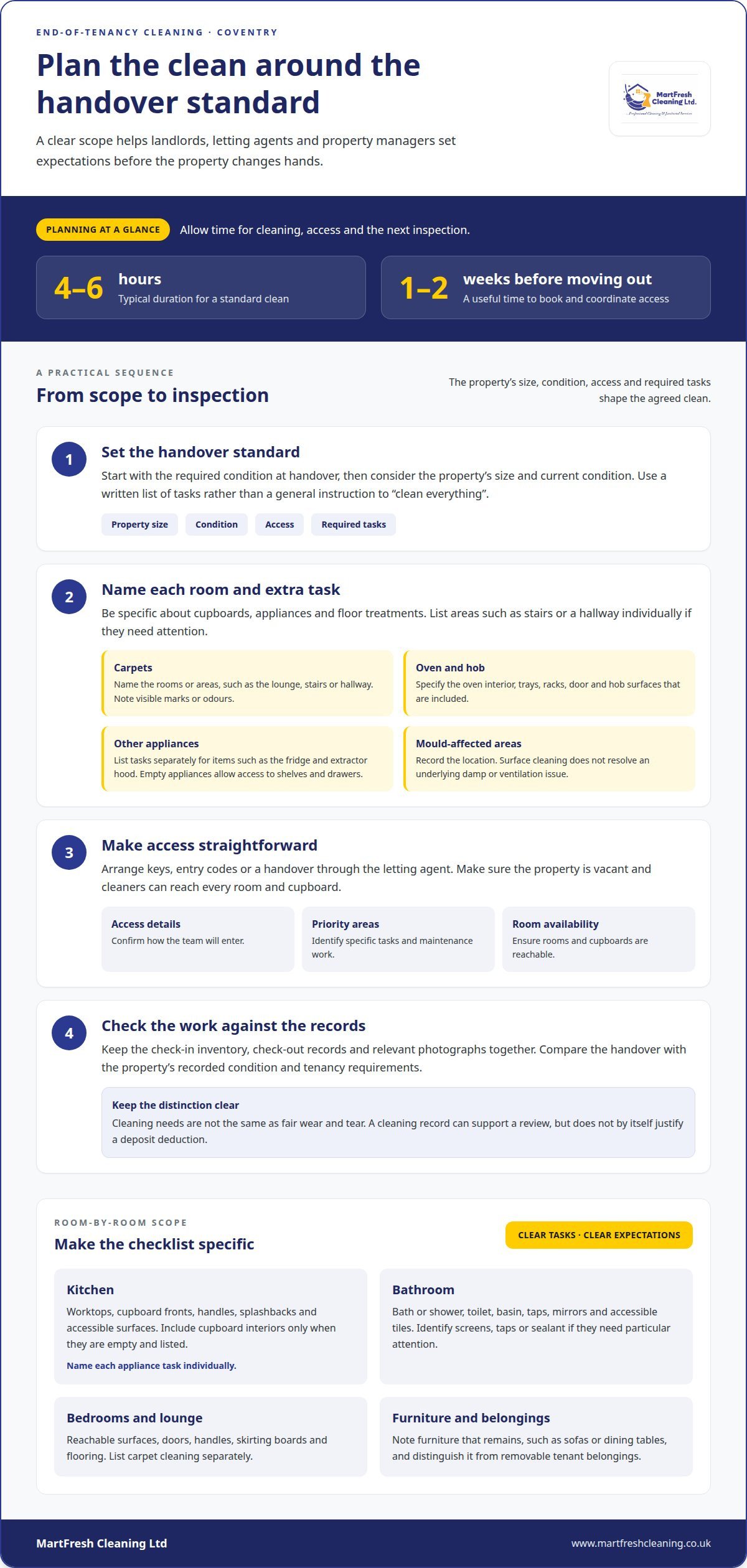
A standard clean typically takes 4-6 hours. Booking 1-2 weeks before moving out allows time to coordinate key collection, maintenance visits and the next inspection. For a student let or HMO, confirm when occupants will leave and when the incoming tenancy begins. This gives agents and property managers time to schedule other work without overlapping access to the property.
Online booking forms commonly ask for the property type, room count, condition, access details and requested tasks. Describe specific priorities, such as a heavily used oven or carpet cleaning in the lounge. These details help a provider prepare a bespoke scope and clarify the work included. They also give you a consistent basis for comparing proposals, rather than assessing different descriptions with different assumptions.
Before the clean, arrange keys, entry codes or a handover with the letting agent. Make sure the property is vacant and cleaners can reach every room and cupboard. Note maintenance work and priority areas so the team can follow the agreed checklist and record access issues. Keep the check-in inventory and relevant photographs available for the inspection. A clean does not by itself establish entitlement to a full deposit; assess the handover against the property’s recorded condition and tenancy requirements.
Carpet, Oven and Mould Cleaning
Carpet cleaning can be specified separately or included in the end-of-tenancy scope. Decide based on the carpet’s condition, the inventory and the areas affected. For example, visible marks on a lounge carpet may need more than routine vacuuming. List each area requiring attention, including stairs or a hallway, so the agreed work is clear.
Carpet cleaning options vary with the material and condition. A professional assessment can distinguish surface dirt from marks that need targeted treatment. Tell the provider whether the carpet is fitted or removable, and identify visible staining or odours. This gives the cleaning team useful context and helps define the work. An agreed scope should name the rooms included, rather than simply saying “carpets”.
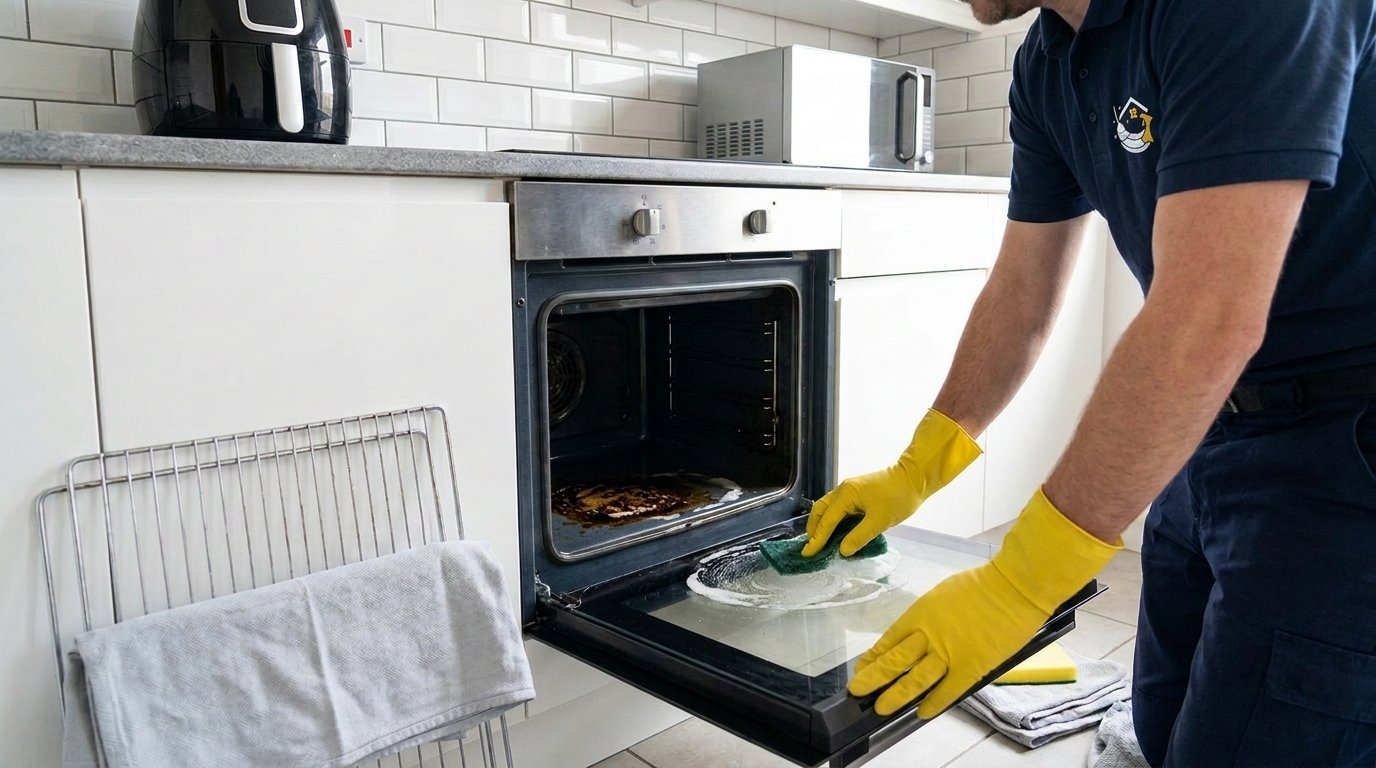
List oven cleaning as a specific task if it is part of the required handover standard. State whether the oven, trays, racks and hob need cleaning. A tenancy checklist might specify the oven interior and hob surfaces, while excluding other appliance interiors. Naming each task prevents assumptions about what the clean covers.
Assess mould-affected areas carefully. Cleaning may address accessible surface marks, but recurring mould can point to an underlying damp or ventilation issue. Record the location, such as a bathroom seal or bedroom corner, and separate cleaning from any repair requirement. Cleaning alone will not resolve a building defect, so maintenance may need to address the cause.
Keep the check-in inventory, check-out records and photographs together. If a tenant asks why a deposit is being reduced, the evidence should show the property’s condition and the reason for any proposed deduction. A cleaning record supports the review, but does not by itself justify a deduction.
Cleaning Rooms, Kitchens, Bathrooms and Appliances
A room-by-room scope sets a clear handover standard. The property’s condition and agreed checklist determine which areas need deep cleaning.
Kitchen and Appliance Cleaning
In the kitchen, the scope can cover worktops, cupboard fronts, handles, splashbacks and accessible surfaces. Include cupboard interiors only when they are empty and listed. Name appliance tasks individually, for example the oven, hob, fridge and extractor hood. This clarifies what is expected at inspection and avoids assumptions about what is included.
Specify whether oven cleaning covers accessible interior surfaces, racks and the door. List the hob and surrounding surface separately. Empty appliances allow access to internal shelves and drawers, while built-up grease or food residue may require more detailed work than routine surface cleaning. Keep cleaning tasks distinct from appliance repairs.
Room and Bathroom Cleaning
For bathrooms, a room-by-room checklist can name the bath or shower, toilet, basin, taps, mirrors and accessible tiles. Soap residue often gathers around shower screens, taps and sealant, so identify these areas if they need attention. Bedroom and lounge tasks can include reachable surfaces, doors, handles, skirting boards and flooring. List carpet cleaning separately to make the required floor treatment clear.
The cleaning team should work through each room against the agreed specification, rather than a broad instruction to “clean everything”. An empty hallway, for example, has different tasks from a furnished lounge. Record condition at check-in and check-out, and distinguish cleaning requirements from fair wear and tear. This gives landlords and letting agents a consistent basis for inspection and handover.
Professional Cleaning Services for Landlords and Tenants
You can arrange a professional clean or clean the rental property yourself. The Tenant Fees Act 2019 prevents landlords in England from automatically requiring tenants to pay for professional end-of-tenancy cleaning, according to UK Parliament. Tenants are generally expected to leave the property as clean as it was at the start. The choice depends on your time, the property’s condition and the agreed handover standard.
A cleaning checklist makes that standard practical. List each room and task, such as cleaning cupboard interiors, wiping skirting boards and washing kitchen chopping boards. Note furniture that remains, including sofas or dining tables, and distinguish it from removable tenant belongings. If a property has furnished rooms, record which items need cleaning and their condition. This gives the cleaning team and the person carrying out the check-out a consistent reference.
A cleaning checklist can support the landlord’s record of the check-out condition by showing which tasks were completed. Keep it with the check-in inventory, check-out report and dated photographs. For example, compare a photograph of a marked carpet at check-in with its condition at check-out. Cleaning evidence supports the record, but does not replace the inventory or establish responsibility by itself.
Distinguish cleaning issues from fair wear and tear. Landlords generally cannot charge tenants for ordinary deterioration, such as slight paint fading or minor carpet flattening. A cleaning deduction may be reasonable if the property is returned less clean than its recorded starting condition. Record the specific area, its condition and the reason for any proposed deduction. If the tenant disputes it, inventory reports and photographs can help clarify the issue through the tenancy deposit scheme’s dispute process.
MartFresh Cleaning: End-of-Tenancy Cleaning
MartFresh Cleaning Ltd provides end-of-tenancy cleaning in Coventry for landlords and property managers preparing homes for new occupants. The service suits changeovers where a defined scope is needed before inspection, handover or a new tenancy. Agreed tasks reflect the property’s condition and access arrangements, giving property professionals a clear basis for planning the work.
A cleaning specification and checklist set out the agreed tasks for each property. A landlord might identify particular rooms, surfaces or appliances that need attention before the next viewing. Carpet extraction cleaning can be separately scoped. Clear task boundaries also help managing agents coordinate cleaning with repairs, inspections and other changeover work.
Different sites can need separate arrangements. A void property may require cleaning before occupation, while a residential block may need communal areas addressed alongside individual tenancies. MartFresh also provides Block & Communal Area Cleaning and After-Builders & Post-Construction Cleaning for distinct property presentation and handover requirements.
Property details, access arrangements and required tasks inform the cleaning specification. A site assessment may be arranged for larger contracts or specialist requirements. Agreed checklists set expectations, while site inspections, additional quality checks or photographic reporting can be incorporated where required. These arrangements help landlords and managing agents review completed work and prepare the property for its next occupant.
For an individual changeover or a managed property requirement, you can discuss the scope and access arrangements with the team. MartFresh supports end-of-tenancy cleaning for landlords in Coventry as part of its managed-property services. Contact MartFresh Cleaning Ltd to discuss your requirements.
Frequently Asked Questions
Can Landlords Force Professional Cleaning?
No. According to UK Parliament, the Tenant Fees Act 2019 prevents landlords in England from automatically requiring tenants to pay for professional end-of-tenancy cleaning. A tenancy agreement can set out the expected cleanliness standard, but a clause requiring a paid professional service does not itself make that charge automatic. Focus on the property’s condition at handover and the tenancy terms when deciding what action is appropriate.
Can Landlords Legally Charge for Cleaning?
A landlord may seek a reasonable deduction if cleaning is needed because the property was returned in a worse condition than at the start. Any deduction should reflect the work actually required, not an automatic charge for professional cleaning. For example, it should relate to an identifiable cleaning issue, not simply the start of a new tenancy. A tenant can challenge a proposed deduction through the deposit scheme.
Do I Need a Professional End-of-Tenancy Clean to Get My Deposit Back?
No. Hiring a professional cleaner is not a condition for receiving a deposit. The key issue is whether the property meets the cleanliness standard recorded at the start of the tenancy. If you arrange professional cleaning, keep the booking confirmation and completion record as evidence of the work. These documents can explain the steps taken, but the deposit decision depends on the property’s condition and tenancy records.
What Happens If You Disagree With Cleaning Charges?
Set out the specific disputed item in writing and explain why you disagree, rather than saying only that the overall deduction is unfair. Identify the room or task you contest and the resolution you are seeking. If direct discussion does not resolve the issue, use the dispute process provided by the tenancy deposit scheme holding the deposit. Keep relevant communications together.
What Happens If the Property Is Left in a Worse Condition Than Expected?
Assess each issue separately before deciding what action is needed. A dirty kitchen surface calls for a different response from a broken cupboard door, even if both are found at check-out. Cleaning addresses cleanliness; repairs address damage or faults. Separating the two helps landlords identify the right next step instead of treating every handover issue as cleaning.
What Does End-of-Tenancy Cleaning Include for Landlords in Coventry?
Agree the scope around the property and its handover requirements. A landlord managing one let may need a different task list from an agent coordinating several student accommodation changeovers. The specification should define included areas and tasks, access arrangements and reporting expectations. This gives the property manager a clear service record without assuming that every property needs the same work.