

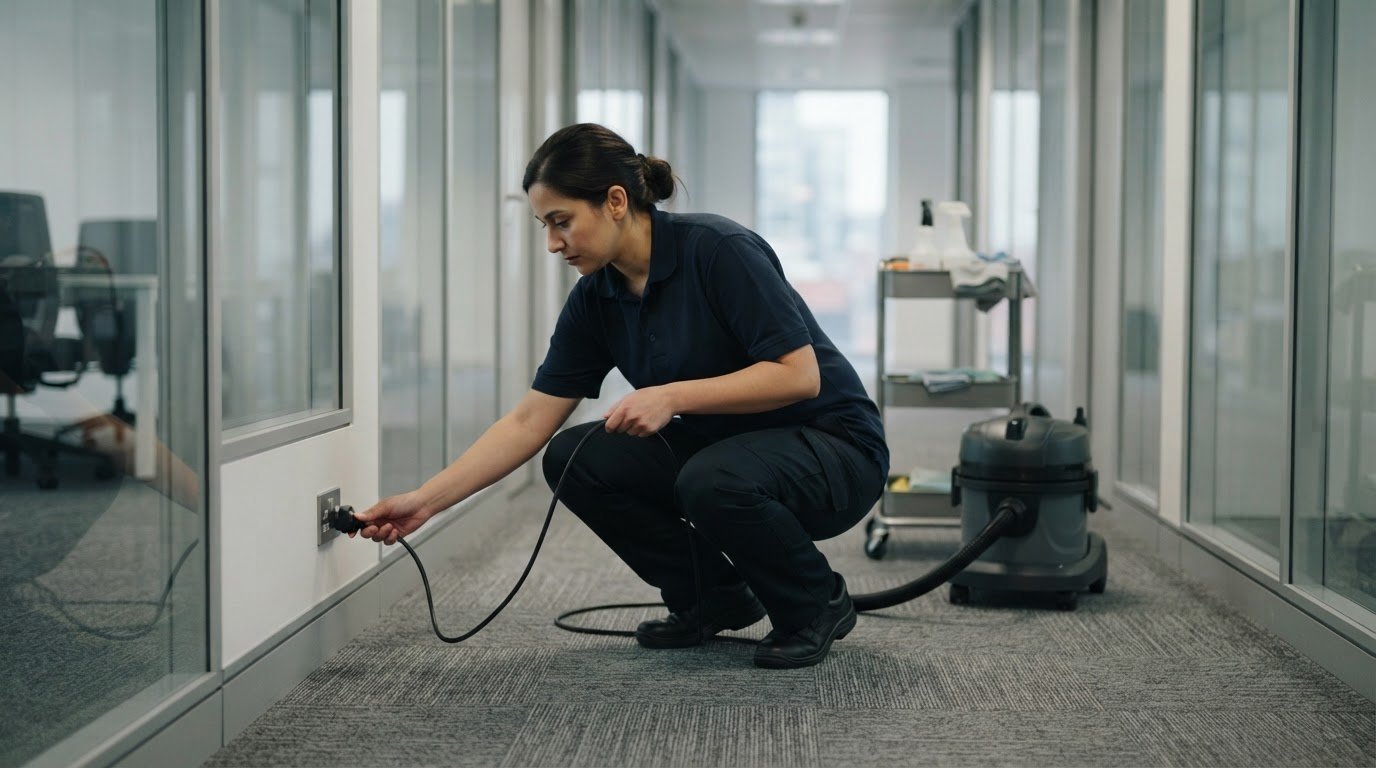

An office cleaning risk assessment gives employers a practical way to identify hazards before work starts, decide who may be harmed and set controls; UK employers must assess workplace risks under the Management of Health and Safety at Work Regulations 1999. That matters even in a familiar office: wet floors, cleaning chemicals, electrical equipment, moving furniture and lone working can create risks for cleaners, staff, visitors and contractors, while generic paperwork may miss site-specific details such as access routes, occupied rooms and cleaning times. If you manage an office or cleaning contract, this guide explains why the assessment is needed, how to identify and control the main hazards, and what to include in a usable cleaning risk assessment template, including responsibilities, safe methods, COSHH information and review arrangements, so the document supports consistent work rather than sitting unused in a folder and helps keep safety and cleaning standards aligned across Birmingham workplaces.
Key Takeaways
- Identify site-specific hazards, including chemicals, electrical equipment and office access arrangements, before cleaning begins.
- Set safe handling procedures and a suitable check-in system for cleaners working alone.
- Plan wet-floor signage and restricted access so staff and visitors can avoid active cleaning areas.
- Use a template to record hazards, who could be affected, control measures, responsibilities and review arrangements.
What are the Hazards Associated with Cleaning?
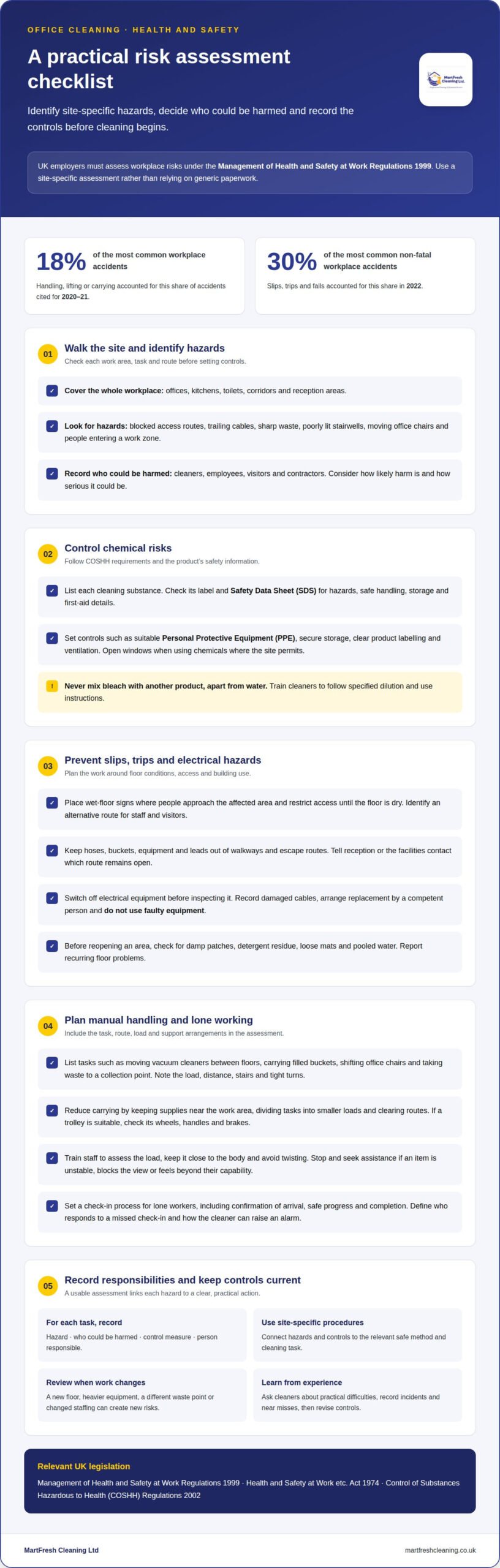
1. Start by identifying the hazards, people exposed and controls needed for each cleaning task. The main UK laws include the Management of Health and Safety at Work Regulations 1999, the Health and Safety at Work etc. Act 1974 and the Control of Substances Hazardous to Health (COSHH) Regulations 2002. Choose Personal Protective Equipment (PPE) from the task and chemical risks, then train cleaners in safe product use, equipment handling and site procedures.
-
Identify workplace cleaning hazards
Before cleaning starts, walk through each work area, including offices, kitchens, toilets, corridors and reception areas. Record hazards such as blocked access routes, trailing cables, sharp waste, poorly lit stairwells, moving office chairs and people entering a work zone. Identify who could be harmed, including cleaners, employees, visitors and contractors. Assess how likely harm is and how serious it could be, then specify controls for each location and task.
-
Assess chemical hazards
List each cleaning substance and check its label and Safety Data Sheet (SDS) for hazards, safe handling, storage and first-aid details. Under the COSHH Regulations 2002, employers must prevent or adequately control exposure to hazardous substances. Set controls such as suitable PPE, secure storage, clear product labelling and ventilation; open windows when using chemicals where the site permits. Never mix bleach with another product, apart from water. Train cleaners to follow the specified dilution and use instructions.
-
Address slips, trips and electrical hazards
Plan floor cleaning around building use. Place wet-floor signs at entrances to the affected area and restrict access until the floor is dry. Identify alternative routes for staff and visitors, and keep hoses, buckets and equipment out of walkways. Switch off electrical equipment before inspecting it. Record damaged cables as hazards and arrange for a competent person to replace them. Do not use faulty equipment. Link each hazard to a clear control in the site-specific method statement.
Manual handling and lone working
Plan how cleaners move equipment, supplies and waste, then assess any work completed alone. Handling, lifting or carrying caused 18% of the most common workplace accidents cited for 2020-21, so task design matters.
- List handling tasks before setting the cleaning schedule. Include moving vacuum cleaners between floors, carrying filled buckets, shifting office chairs and taking waste to a collection point. Note the route, load, distance, stairs and tight turns. These details help identify tasks involving awkward posture, repeated movement or difficult carrying.
- Reduce unnecessary carrying by keeping equipment and supplies near the work area. Divide tasks so cleaners can use smaller loads, and clear routes before moving items. If a trolley is suitable, check that its wheels, handles and brakes work. Include a procedure for bulky waste rather than expecting staff to lift it alone.
- Set a safe method for any task that still requires lifting or carrying. Train staff to assess the load, keep it close to the body and avoid twisting while moving. Cleaners should stop and seek assistance if an item is unstable, blocks their view or feels beyond their capability. Record task-specific controls in the assessment.
- Assess lone working by considering the location, activity, access arrangements and available support. Set a check-in process to confirm the cleaner has arrived, remains safe and reports completion. Check lone workers regularly using a monitoring system, and test the system regularly too. Define who responds to a missed check-in and how the cleaner can raise an alarm.
- Review the arrangements whenever work changes. A new floor, heavier equipment, a different waste point or a change in staffing can create new handling and lone-working risks. Ask cleaners about practical difficulties, record incidents and near misses, then revise the controls. Keep emergency contact details and reporting steps accessible to staff working alone.
Slips, trips and safe cleaning procedures
Plan cleaning work around people, floor conditions and access routes. In 2022, slips, trips and falls accounted for 30% of the most common types of non-fatal workplace accidents.
- Schedule floor cleaning by zone, starting with areas that have less foot traffic. In a busy office, clean one corridor section at a time and keep an alternative route open. Plan the sequence so staff do not need to cross freshly mopped floors to reach meeting rooms, toilets or reception.
- Use signs and access controls suited to the work area. Place wet-floor signs where people approach the affected floor, including at both ends of a corridor where needed. Restrict access during cleaning and drying. In an occupied office, tell reception or the facilities contact which route remains open.
- Check the floor before reopening the area. Look for damp patches, detergent residue, loose mats and pooled water near entrances. Dry any remaining patches and reposition mats that could curl or move. Record recurring problems, such as water tracked in by visitors, so the cleaning schedule can address them.
- Prevent equipment from creating trip hazards. Position buckets, vacuum cleaners and leads beside the work zone, not across doorways or escape routes. Use cable-free equipment where available. Otherwise, route leads away from walkways and move them as work progresses. Store tools promptly when each area is complete.
- Set a clear process for spills and unexpected hazards. Clean a small liquid spill promptly, then keep people away until the floor is dry. If a damaged floor tile or loose threshold needs repair, report its exact location and maintain a safe route around it. Around 3,000 serious accidents involving cleaners are reported to the Health and Safety Executive each year, making incident and near-miss records useful for identifying repeat hazards.
Cleaning risk assessment template
Use a template to record hazards, who could be harmed, existing controls and further actions. If workplace conditions remain unchanged, review the assessment at least once a year. Update it sooner if cleaning methods, products, equipment or the site layout change.
- Identify the site and work covered. Record the office address, areas included, cleaning tasks, assessment date and responsible person. Specify whether the assessment covers reception, washrooms, kitchens, stairwells or other zones. A clear scope helps staff apply the right controls to each area and task.
- Describe each hazard and who could be affected. For example, a trailing vacuum lead could affect cleaners, employees and visitors. A chemical used in a kitchen could expose cleaners through skin contact or inhalation. Name the activity and people at risk rather than using general entries such as “cleaning hazards”.
- Record existing controls, then decide whether further action is needed. For a wet floor, note the signage, access restrictions and drying process. For a chemical, record safe handling instructions, storage arrangements and relevant COSHH information. Link each hazard to a practical control, not a vague statement such as “take care”.
- Assign a responsible person and completion date to each further action. For example, name the facilities manager responsible for repairing a damaged threshold, then record when the repair is complete. Under UK legislation, employers with more than five employees must record their risk assessment findings. Keep the document accessible to relevant staff.
- Include review and consultation details. Record who contributed, the review date and what would prompt an earlier update. Employers should consult employees with cleaning responsibilities. If workplace conditions remain unchanged, review the assessment at least once a year. Revise it sooner after an incident, a new product or a change in cleaning equipment.
MartFresh Cleaning Ltd: Office & Commercial Cleaning
MartFresh Cleaning Ltd provides Office & Commercial Cleaning for businesses that need a defined scope, reliable standards and cleaning arranged around site requirements. For facilities and office managers, this can support consistent workplace presentation through clear task checklists and documented health and safety procedures.
Where cleaning covers several property areas, the agreed scope can define tasks, access arrangements and relevant site-specific controls. This sets practical expectations for cleaners and supports quality control across the contract. An office cleaning risk assessment should still reflect the hazards and work activities at your premises.
To discuss structured office cleaning for your workplace, contact MartFresh Cleaning Ltd about the site and required scope.
Put your cleaning controls into practice
An office cleaning risk assessment is most useful when its controls inform the cleaning specification, staff briefings and day-to-day reporting. Set a clear process for recording incidents, escalating site changes and updating procedures when the cleaning scope changes. This keeps safety arrangements aligned with how the building is actually used.
For property professionals managing more than an office, consistent oversight can also support standards across sites and work types. MartFresh Cleaning Ltd provides Block & Communal Area Cleaning, After-Builders & Post-Construction Cleaning and End-of-Tenancy Cleaning. Documented health and safety procedures support accountable cleaning arrangements for managed properties and commercial workplaces.
Discuss your cleaning requirements and site scope with Contact MartFresh Cleaning Ltd. A clear starting brief can help set practical expectations for the work ahead.
Frequently Asked Questions
Why Should Employers Complete a Risk Assessment for Cleaning?
Employers need a clear way to coordinate cleaning with normal office operations. The assessment can define who authorises access, who informs occupants about changed arrangements and who handles problems during a shift. Agreeing responsibilities with the cleaning team helps prevent gaps, such as staff entering a room before cleaning is complete or a reported fault having no assigned owner.
What is a risk assessment for office cleaning in the UK?
An office cleaning risk assessment connects cleaning activities with the conditions and people at a particular workplace. It should help managers and cleaners understand how agreed procedures work in practice, including when cleaning takes place in occupied offices. A template can provide useful prompts, but its entries must reflect the actual tasks, layout and working arrangements.
How to carry out an office cleaning risk assessment step by step
First, divide the cleaning work into distinct activities, such as desk-area cleaning, washroom servicing and floor care. Walk through each activity with someone who understands the work, then consider how it fits around office use. Agree practical arrangements with the site contact, brief the cleaners and observe the work in progress. Use staff feedback to identify procedures that need adjusting.
What hazards should an office cleaning risk assessment cover?
Consider hazards created by the task, not just the room. Dusting high fittings may involve reaching overhead, while handling office waste can expose cleaners to unexpected sharp objects. Also consider secure areas, alarm procedures and equipment that must remain untouched, such as computers or confidential files. These details clarify the boundaries between cleaning duties and other workplace responsibilities.
What are the risks of cleaning chemicals and how can they be controlled?
The risk depends on the substance, how it is used and the likelihood of exposure. A product may present different concerns during routine surface wiping than during a more involved cleaning task. Where a workplace uses numerous hazardous substances or has a complex process, employers may need a separate COSHH assessment. This distinguishes product hazards from the exposure each task may create.
What controls are needed to prevent slips, trips and falls during office cleaning?
Agree how a cleaned area will be handed back for normal office use. The procedure should identify who confirms the area is ready and how this is communicated to reception, facilities staff or affected teams. For recurring cleaning, record where access conflicts arise and adjust the sequence or timing. This addresses coordination problems that signage alone cannot resolve.