


Communal-area cleaning schedules should reflect how a residential block is used. For property managers arranging block management cleaning services in Birmingham, footfall, occupancy, lift use and bin-store activity all influence the schedule. The same site-specific approach applies to managed properties across Solihull, Sutton Coldfield, Wolverhampton, Walsall, Dudley, West Bromwich, Smethwick, Oldbury, Halesowen and Coventry.
Visits may be daily, weekly or fortnightly, depending on the property’s requirements. This article explains how to set a suitable frequency, define upkeep tasks and use agreed specifications, checklists and reporting to support consistent standards across Birmingham and the wider West Midlands.
Key Takeaways
- Set cleaning visits around occupancy, footfall and how quickly communal areas become soiled. Schedules can be weekly, daily or fortnightly, depending on the block’s requirements.
- Define the cleaning scope by area, from entrance halls, corridors, stairwells and lifts to bin stores and other agreed common parts.
- Give managing agents a clear basis for monitoring contractor performance with an agreed cleaning specification, task checklist and suitable inspection or reporting arrangements.
- Include bin store and car park upkeep in the schedule where required, so these areas are considered alongside the block’s internal communal spaces.
What block management cleaning services are available in Birmingham?
Managed blocks in Birmingham need cleaning scopes that reflect each building’s layout and use. In Jewellery Quarter apartments, entrance halls and lift interiors can collect marks from regular resident and visitor traffic. A practical scope can cover floors, touchpoints, internal glazing and visible surfaces. Corridors and stairwells also need scheduled attention, particularly where residents use them daily.
Routine communal-area cleaning focuses on repeatable tasks across the agreed common parts. These may include vacuuming carpeted corridors, mopping hard floors, wiping accessible ledges and cleaning entrance doors. Lift buttons, handrails and internal glass can be included in the checklist. Naming each area and task helps distinguish regular cleaning from occasional detail work.
- Residential blocks: entrance halls, corridors, staircases, lifts and shared facilities.
- HMOs: shared hallways, kitchens and other agreed communal spaces.
- Student accommodation: high-use circulation areas and shared facilities between term-time peaks.
- Carpeted common parts: routine vacuuming, with carpet cleaning scheduled separately where required.
Some buildings also need periodic deep cleaning or additional work after refurbishment. In a Digbeth apartment block, for example, a post-refurbishment clean can address construction dust before residents use affected corridors again. The scope should identify the areas included, the tasks required and any access arrangements. This keeps a one-off project separate from recurring communal upkeep.
For property managers, a useful first step is to map the building’s common parts, then group tasks by area and condition. A block with lifts, carpeted corridors and shared facilities needs a different checklist from a smaller building with stairs alone. Clear scope definition makes it easier to align cleaning work with a Birmingham property’s layout and resident use.
Cleaning for property managers and managing agents
For Birmingham property management, a clear cleaning arrangement should define the work, accountability and site safety. These details help you assess whether the proposed service meets your operational needs.
Comparing Companies and Service Contracts
Give each company the same building brief, including access arrangements, required tasks, visit frequency and reporting expectations. Compare the written scope, checklist and quality-control process rather than relying on broad service descriptions. For example, specify how missed tasks are recorded, who receives updates and how follow-up actions are tracked. This makes proposals easier to assess against your management requirements.
Communal Cleaning Standards and Safety Rules
Set standards through a written specification describing the required finish and task method. Site-specific risk assessments and method statements should explain relevant hazards and safe working procedures. COSHH information should cover the cleaning substances used on site. Spills or debris can create slip or trip risks, while accumulated waste may affect resident wellbeing or obstruct access routes.
Contractor Insurance and Staff Credentials
Review evidence of appropriate business insurance, including public liability and employers’ liability cover. Ask how the cleaning company assesses staff experience, reliability and suitability for your building. Consider DBS checks where relevant to the site and role. A site induction should explain access controls, incident reporting and resident-facing procedures, so operatives understand the requirements before work begins.
Available Block Cleaning Services
For contract planning, distinguish scheduled cleaning from one-off work required after a specific event. A block may need an ongoing arrangement, while refurbishment or a change in occupancy can create a separate cleaning brief. Define how extra tasks are authorised, recorded and reviewed so they do not blur the routine scope. This also helps management teams track delivery over time.
For a block-specific scope, consider how communal cleaning arrangements can support your management requirements.
Cleaning schedules and visit frequency
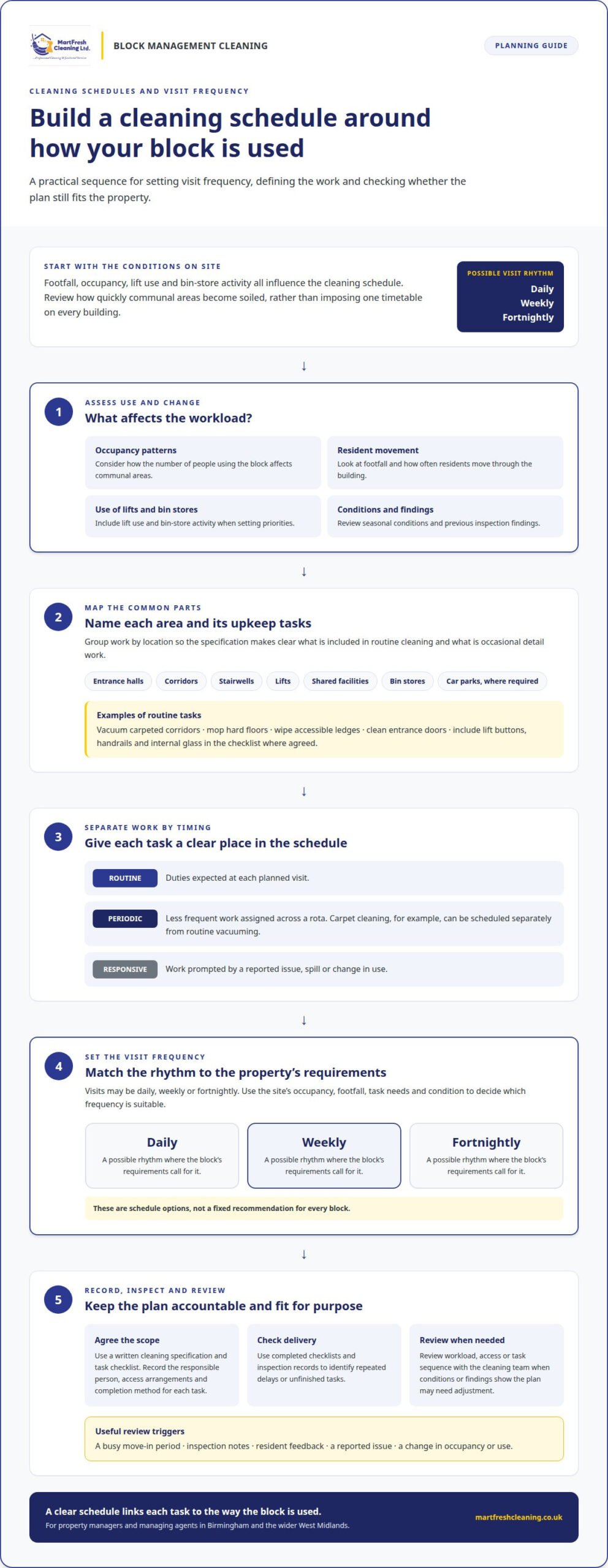
A cleaning schedule should link each task to how quickly conditions change at the property. For block management cleaning services in Birmingham, managers can set priorities by reviewing occupancy patterns, resident movement, seasonal conditions and previous inspection findings. This gives the schedule a practical basis without imposing one timetable on every building.
Separate recurring duties from tasks that are needed only after a specific trigger. A routine checklist, for example, can cover standard upkeep, while a reported spill or building event prompts a specific response. Record the responsible person, access arrangements and completion method for each task. This helps the cleaning team and property manager understand what the agreed scope requires.
Build the schedule around task groups such as:
- Routine duties: work expected at each planned visit.
- Periodic tasks: less frequent work assigned across a rota.
- Responsive actions: work prompted by a reported issue or change in use.
- Review points: checks that show whether the planned workload remains suitable.
A building with changing occupancy, for example, may need its task allocation reviewed after a busy move-in period. A stable site may keep its existing plan until inspection notes or resident feedback reveal a pattern. Document review decisions so any schedule changes have a clear operational reason.
Use completed checklists and inspection records to identify tasks that repeatedly take longer or remain unfinished. The manager can then review the workload, access plan or task sequence with the cleaning team. This keeps block management cleaning services in Birmingham responsive to site conditions, while recording why the schedule changed.
Bin store and car park upkeep
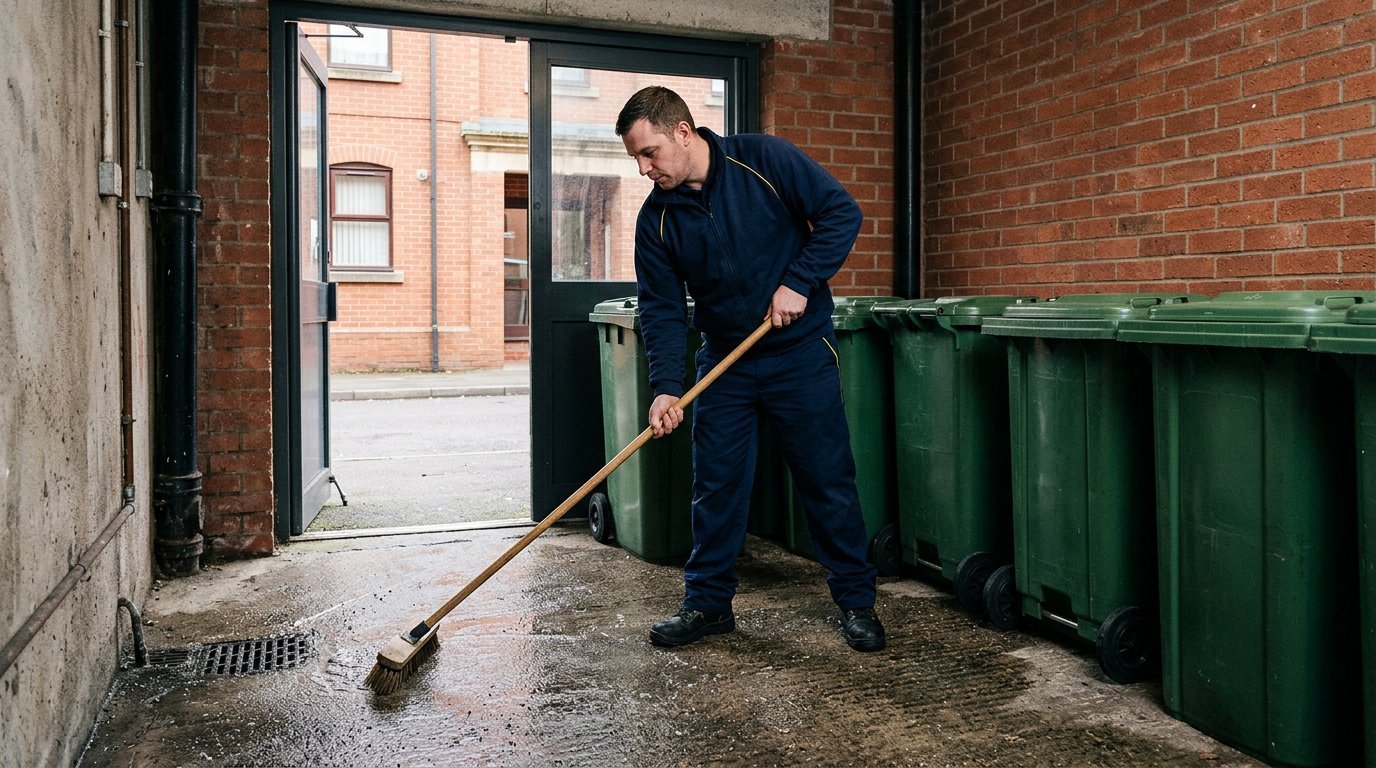
Bin stores and car parks need clearly defined tasks in a managed block’s cleaning specification. A bin-store visit in Birmingham can include sweeping accessible floors, removing loose litter and wiping reachable door handles. These tasks help keep the area presentable for residents and make missed waste or spills easier to report.
Define the bin-store routine by identifying the surfaces and access points included. For example, cleaners can check the floor around containers, door thresholds and nearby walls for visible marks. The schedule should also explain how staff report overflowing bins or damaged fixtures, which need attention beyond routine cleaning.
- Bin-store floors: remove loose litter and sweep accessible surfaces.
- Doors and handles: wipe reachable contact points and visible marks.
- Car park walkways: clear loose litter from agreed pedestrian areas.
- Shared access points: report spills, obstructions or damage through the agreed channel.
Car park upkeep should distinguish cleaning from repairs or grounds maintenance. A specification might include collecting litter from pedestrian routes and the entrance to the bin store, while excluding vehicle repairs or specialist waste handling. Site instructions should cover access, resident movement and any areas outside the cleaning scope.
For a block with underground parking, the scope should identify the walkways and access points included. For an open car park, it can define the pedestrian routes and area around the refuse enclosure. Clear boundaries prevent assumptions about parked vehicles, locked areas or maintenance tasks outside the cleaning remit.
Set a reporting process for recurring issues, such as litter accumulating beside a particular entrance. You can discuss a communal cleaning scope that includes agreed bin-store and car park tasks.
Cleaning standards, safety and reporting
A written cleaning specification turns expected standards into tasks that can be checked. For a Birmingham apartment block, it can define the required finish for entrance floors, lift interiors and shared facilities. A task checklist then records which duties are completed at each scheduled visit. Clear wording helps property managers identify missed work without relying on general impressions.
Safety documentation should reflect the building, cleaning methods and substances used. A site-specific risk assessment identifies relevant hazards, while a Risk Assessment and Method Statement (RAMS) sets out safe working steps. Control of Substances Hazardous to Health (COSHH) information covers applicable cleaning products. This gives cleaners practical instructions for handling products and working around residents.
Site inspections offer a direct way to review work against the specification. A property manager can examine agreed areas, such as stairwell floors or lift touchpoints, and record any tasks needing attention. The findings can then prompt a specific action, such as completing an unfinished task or clarifying checklist wording.
Reporting links each visit to contract oversight. Depending on the agreed arrangement, records can include completed checklists, access issues and photographic evidence. For example, a cleaner may report being unable to access a locked communal room, helping the managing agent distinguish an access issue from an omitted task.
Use recurring inspection findings and resident feedback to identify patterns. If the same entrance repeatedly needs attention between visits, review its task frequency or scope. Agreed reporting routes also help direct maintenance concerns, such as damaged fixtures, to the relevant property contact. This keeps cleaning records useful for quality control and day-to-day block management.
Set a clear standard for your next contract
The next step is to turn the building’s priorities into a practical scope of work. For block management cleaning services in Birmingham, identify which outcomes matter to residents, property managers and managing agents, then agree how the work will be maintained and reviewed. A clear brief gives the cleaning team a defined basis for service delivery and your team a consistent reference point.
MartFresh Cleaning Ltd supports managed properties with block and communal area cleaning, as well as after-builders and post-construction cleaning or end-of-tenancy cleaning when property requirements change. The work can be arranged around the agreed scope, site access and quality checks, helping you plan for ongoing upkeep and specific property transitions.
Before your next contract discussion, note the areas requiring attention, the expected outcomes and how updates should be reported. A well-defined starting point keeps the conversation focused on the building’s operational needs.
Contact MartFresh today to discuss a cleaning scope for your managed property and take the next step towards consistent standards.
Frequently Asked Questions
How often should communal areas be cleaned?
Assess the required frequency by reviewing resident feedback, building use and how quickly marks or debris return between visits. Consider whether entrances, stairwells and other communal areas remain clean to the agreed standard throughout the current schedule. Changes in occupancy or recurring concerns may indicate that the frequency needs reviewing.
Do you offer after-hours or weekend cleaning?
Cleaning visits are arranged around agreed site access, operating requirements and the property’s schedule. If your building is busiest during the day, include access timing and resident movement in the site brief. This gives the schedule a clear operational basis without assuming every block has the same working hours or access arrangements.
Do you work with managing agents and HOAs?
MartFresh Cleaning Ltd works with property managers, block management companies and managing agents. For UK residential sites, the relevant organisation may be a housing association or property management company rather than a homeowners’ association (HOA). The cleaning scope can reflect the block’s requirements, access arrangements and agreed reporting process.
Need cleaning services for property management?
MartFresh Cleaning Ltd provides cleaning for managed residential properties, including blocks, HMOs and student accommodation. Outline the building type, areas requiring attention and access arrangements. A site assessment can help establish the scope before a written cleaning specification is prepared, giving your management team a defined basis for arranging the work.
Which Birmingham companies provide communal area cleaning for apartment blocks?
MartFresh Cleaning Ltd provides communal area cleaning for apartment blocks in Birmingham. Property managers can set the scope around the building’s common parts and cleaning requirements. The company also supports residential blocks and managed properties across the West Midlands, with site arrangements and the cleaning specification defining the work for each property.
What is included in block cleaning services, such as stairwell, lobby and lift cleaning?
The agreed scope can include floor care in stairwells and lobbies, cleaning accessible surfaces and attention to lift interiors. The specification determines which tasks apply to each area, such as wiping lift doors or cleaning entrance glass. It can also distinguish routine work from periodic tasks, so the checklist reflects the building’s actual requirements.