

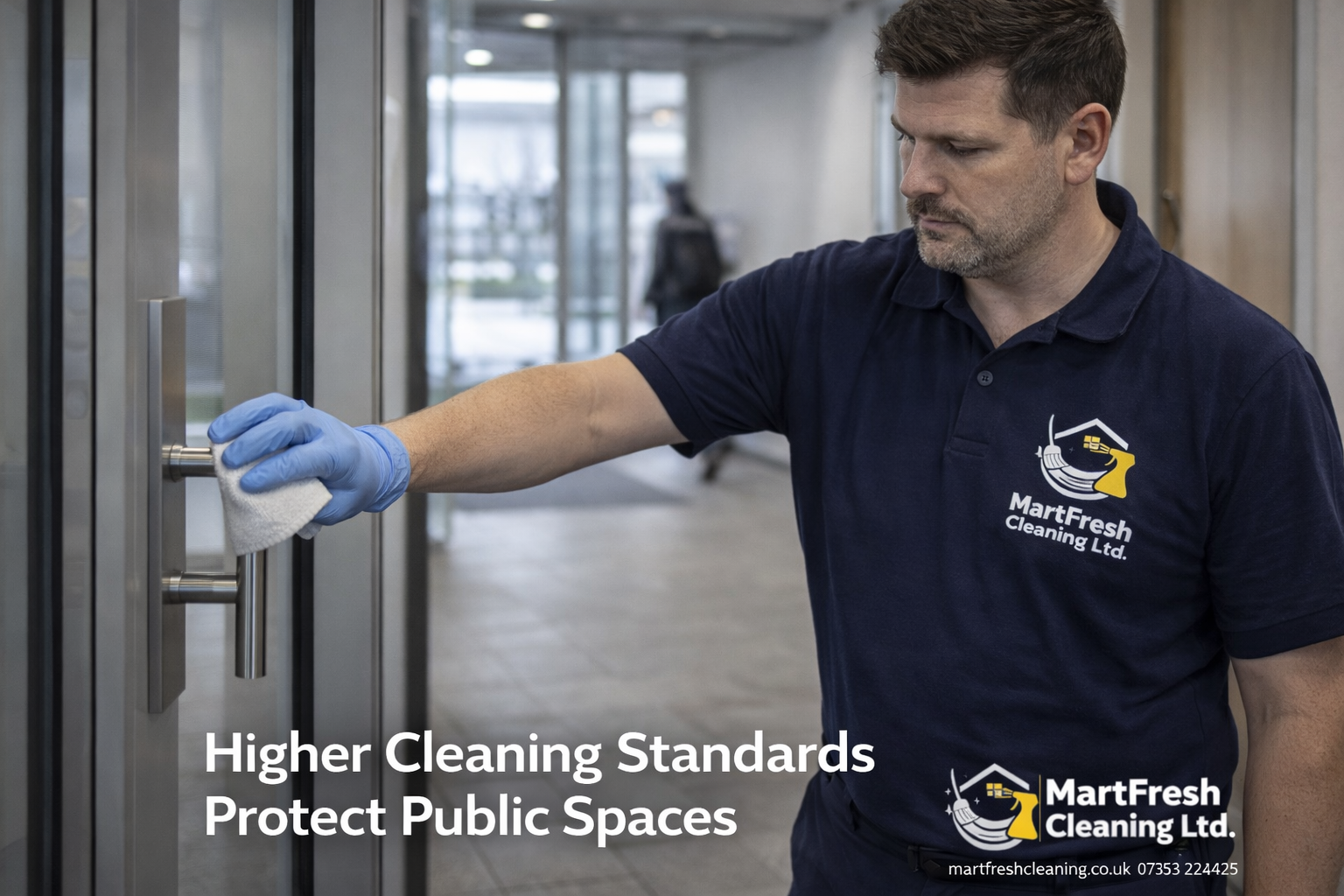

Recent reporting by tomorrowscleaning.com has highlighted a growing concern across the UK. As flu continues to circulate and the NHS remains under pressure, industry leaders are calling for higher and more consistent cleaning standards across workplaces and public spaces.
This is no longer a theoretical discussion. It is an operational issue affecting health, attendance, and service continuity across the country.
The British Cleaning Council (BCC), which represents the £67bn cleaning, hygiene, and waste industry, has warned that cleaning standards in public and commercial environments must improve if we are to reduce the spread of common infections such as flu and protect against future pandemics.
According to the BCC, effective cleaning combined with proper hand hygiene remains one of the most practical ways to reduce illness in workplaces, schools, and public buildings.
The impact of illness is already significant
Current figures underline why this matters:
• Over 3,000 patients were hospitalised with flu in England in a single week in December
• Workplace sickness absence costs the UK economy up to £103bn each year
• Tens of thousands of pupils are absent from schools annually due to illness
These numbers reflect not just health challenges, but operational disruption across every sector.
A structured approach to cleaning is now the expectation
In response, the British Cleaning Council has published a new document, The Strategic Framework for Achieving Cleanliness and Hygiene in Public Environments. The framework provides systematic guidance to help organisations develop cleaning and hygiene policies tailored to their specific environments.
Rather than generic advice, the framework focuses on:
• Defining hygiene and cleanliness clearly
• Assessing risks within each environment
• Establishing appropriate cleaning standards
• Implementing structured cleaning procedures
• Monitoring and improving outcomes over time
This aligns with guidance issued by the World Health Organisation on hand hygiene in community settings and reflects a move toward measurable, repeatable cleaning processes rather than ad-hoc routines.
Why this matters for managed buildings and workplaces
One of the key points raised by the BCC is the importance of identifying high-risk areas where infection is most likely to spread. These include:
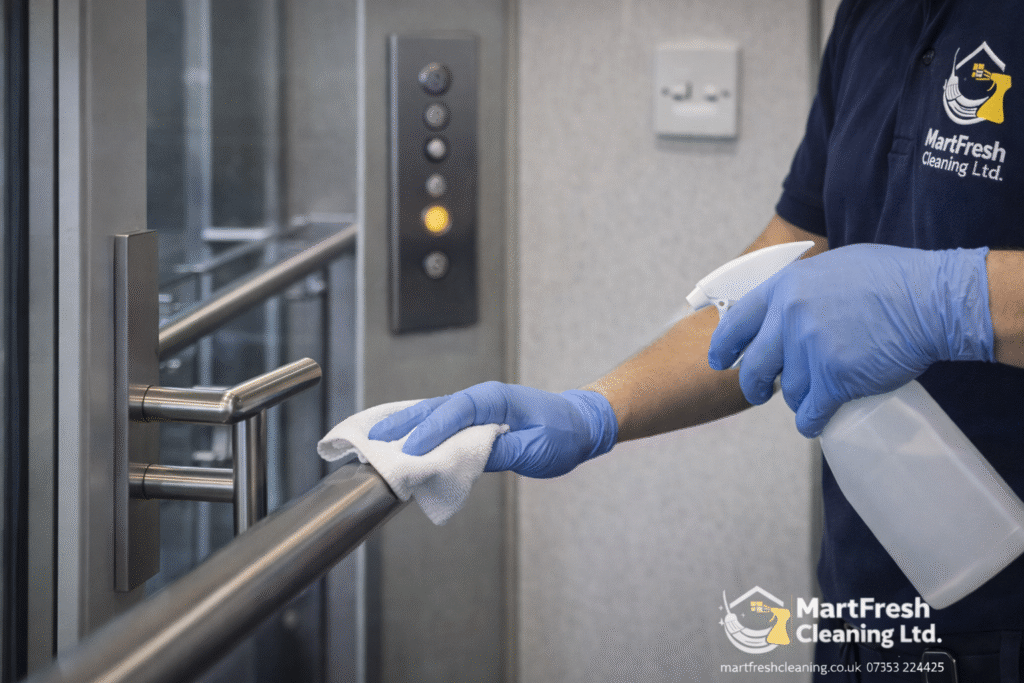
• High-touch surfaces such as door handles, handrails, switches, and shared equipment
• Communal washrooms and kitchens
• Food preparation areas
• Cleaning tools and equipment themselves
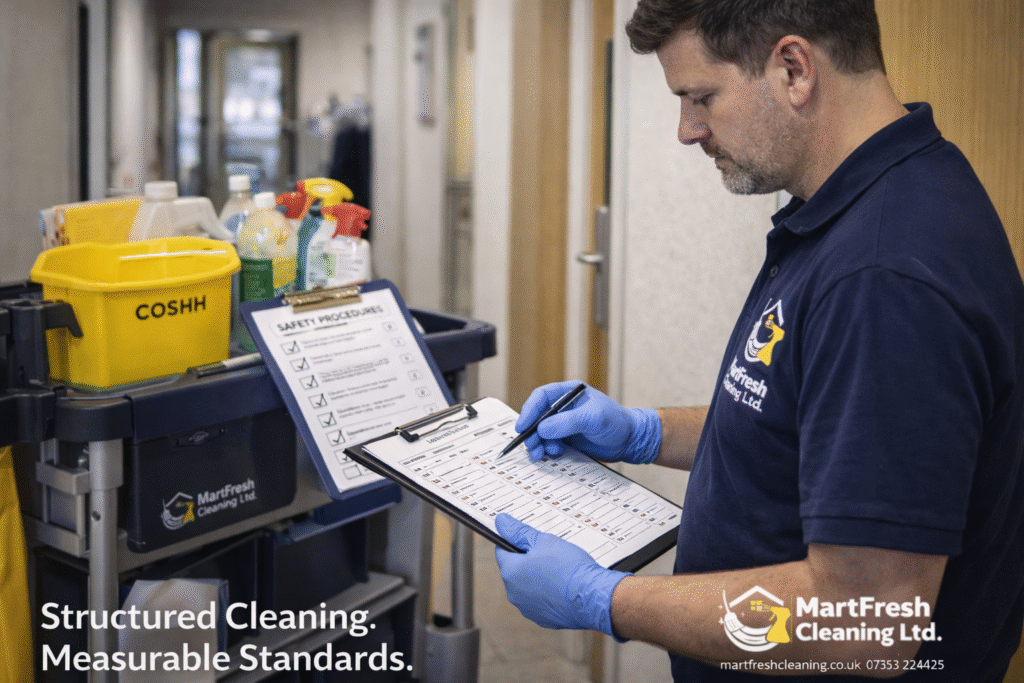
The framework stresses the need for detailed cleaning protocols that specify frequency, products, and application methods. This is exactly where many buildings fall short when cleaning is treated as a background task rather than a managed service.
Cleaning standards are becoming a public confidence issue
David Garcia, Chair of the BCC, noted that repeated surges in illness highlight the need for higher cleaning standards in public spaces and workplaces. The goal is not only to reduce infection but to reassure the public that environments are being managed responsibly.
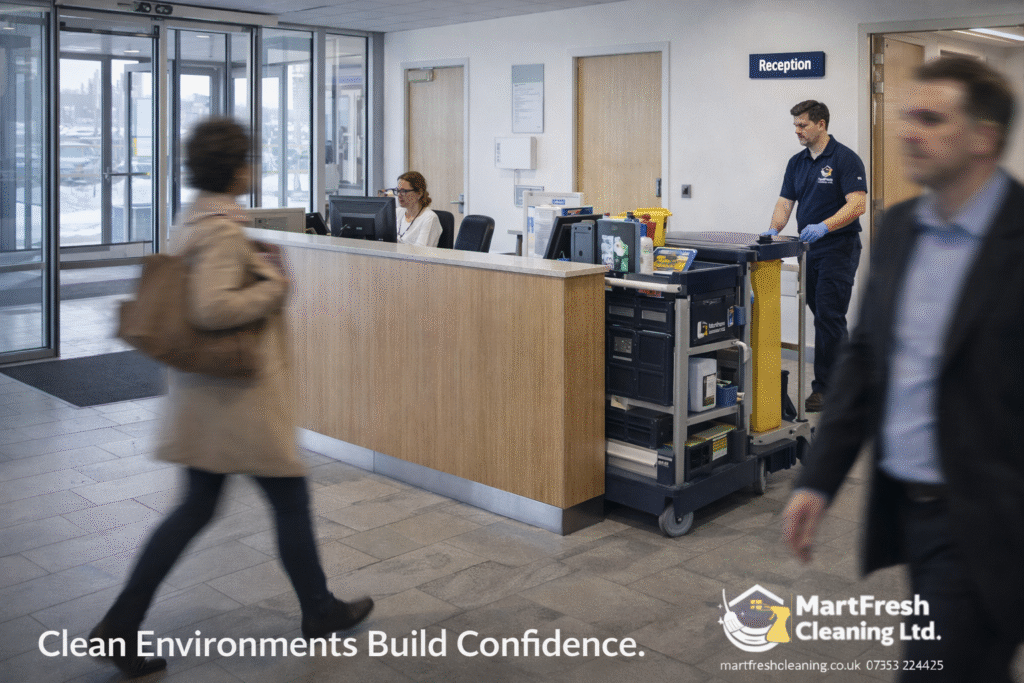
This shift is important. Cleanliness is no longer judged only by appearance. It is increasingly linked to trust, safety, and organisational competence.
How this aligns with the MartFresh approach
At MartFresh Cleaning Ltd, this direction reflects what we already see on the ground across Birmingham and the West Midlands.
Higher cleaning standards are not achieved through stronger chemicals or reactive cleaning. They come from:
• Clear scopes and documented procedures
• Proper risk assessment and COSHH controls
• Focus on high-touch areas
• Correct product use and dilution
• Regular monitoring and quality checks
Cleaning must be tailored to how a building is used, whether that is an office, a managed residential block, an HMO, or a shared public space.
Looking ahead
The BCC has announced plans to pilot the framework in schools, measuring its impact on absence rates and infection spread. The expectation is that evidence from these trials will support wider adoption across workplaces and public environments.
This reinforces a clear message for 2026 and beyond.
Higher cleaning standards are no longer optional. They are foundational to health, resilience, and operational stability.
For those managing buildings, now is the time to review whether cleaning routines are structured, measurable, and aligned with how spaces are actually used.
Source reference
Based on reporting by tomorrowscleaning.com and guidance from the British Cleaning Council
www.britishcleaningcouncil.org
FAQ
Why are higher cleaning standards important in public spaces
Higher cleaning standards reduce infection spread, protect staff and visitors, and support business continuity in offices and managed buildings.
How does commercial cleaning help prevent flu transmission
Professional commercial cleaning targets high touch surfaces, communal areas, and shared spaces using controlled products and structured routines.
What areas should be prioritised during flu season
Door handles, handrails, switches, washrooms, kitchens, and shared equipment should be cleaned more frequently.
Are structured cleaning contracts better than ad hoc cleaning
Yes. Structured contracts provide consistency, accountability, and measurable standards, especially in commercial and managed environments.
Who should use professional commercial cleaning services in Birmingham
Offices, facilities teams, block managers, landlords, HMOs, schools, and public buildings benefit from structured commercial cleaning services.