

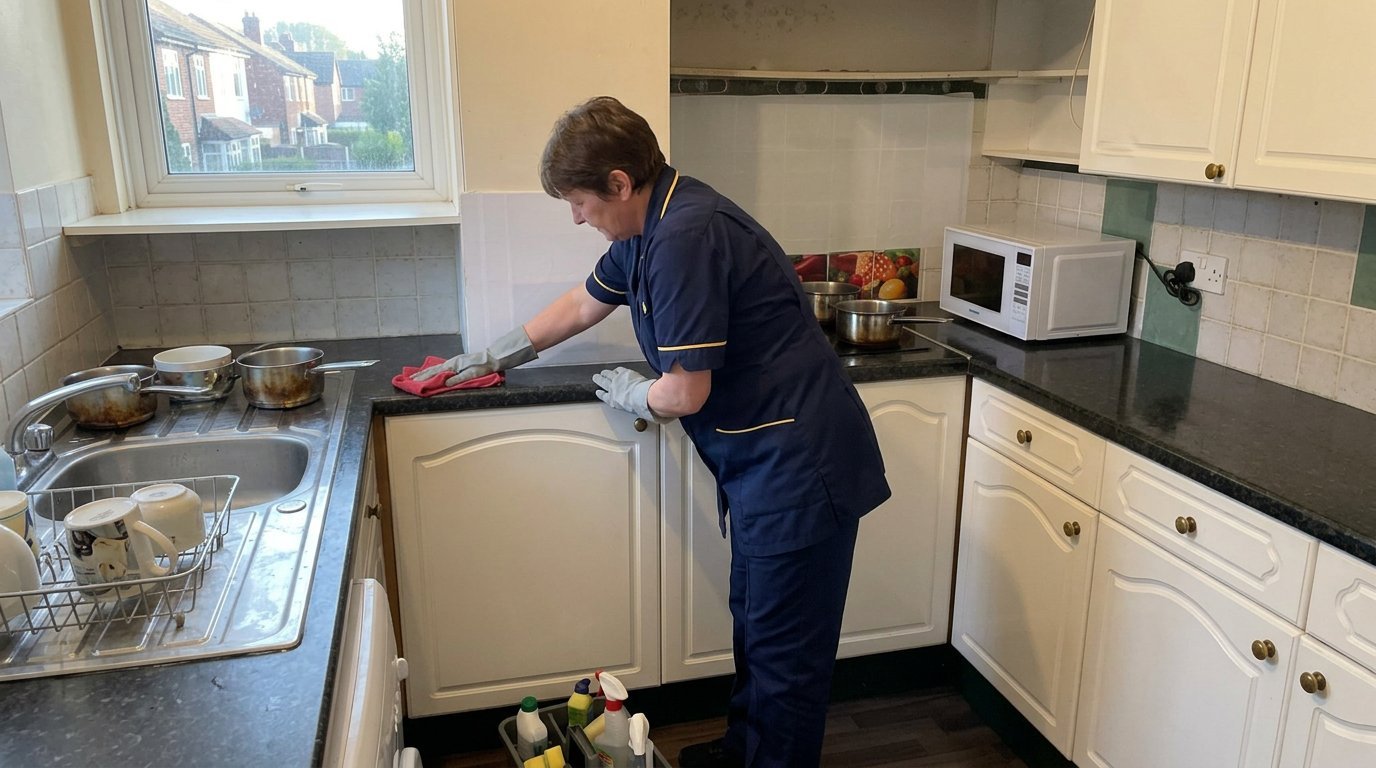

Clean student accommodation depends on a consistent cleaning schedule and clear standards; knowing how to keep student accommodation clean means planning for shared bathrooms, kitchens and bedrooms, not waiting for visible problems to build up. In Birmingham’s student properties, frequent use can put pressure on communal areas, so property managers need agreed cleaning tasks, reliable delivery and a clear way to report maintenance concerns such as persistent damp or leaks. This guide explains how professional cleaning routines and checklists help maintain presentation between student changeovers, what to include in the cleaning scope for bathrooms, kitchens and bedrooms, and how quality checks can support consistent standards and inspection readiness, while showing where simple daily and weekly routines fit around scheduled cleans.
Key Takeaways
- Set clear standards for bathroom cleaning, including attention to limescale, ventilation and damp-prone areas.
- Include kitchen worktops, washing-up areas, appliances and floors in the cleaning specification.
- Define communal area tasks and frequencies, then use checklists and reporting to track delivery.
- Use site-specific risk assessments, method statements and COSHH documentation to support safe cleaning arrangements.
Professional cleaning and ventilation for shared bathrooms
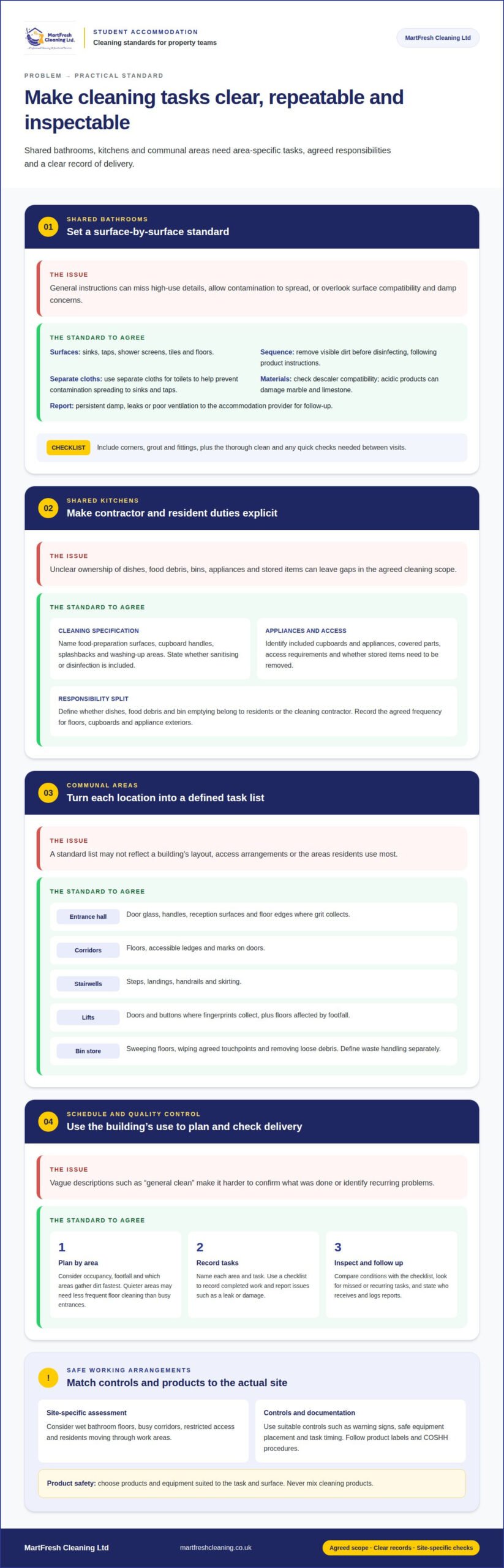
A bathroom cleaning scope should name the surfaces to be cleaned, including sinks, taps, shower screens, tiles and floors. Cleaners remove visible dirt before disinfecting surfaces according to the product instructions. Using separate cloths for toilets helps prevent contamination spreading to sinks and taps.
For limescale, use a suitable descaler and check that it is compatible with the surface. Acidic products can damage marble, limestone and other sensitive materials. Include corners, grout and fittings when cleaning shower screens and tiles. A bathroom checklist can set out the scheduled thorough clean and the quick checks needed between visits.
Ventilation helps reduce dampness: opening a window or using an extractor fan can support moisture control. Cleaners can dry wet surfaces where this is included in the agreed scope, but persistent damp, leaks or poor ventilation should be reported to the accommodation provider. A cleaning team can record these issues for follow-up.
Professional end-of-tenancy cleaning can be worthwhile when a shared bathroom needs consistent preparation for inspection or re-letting. The value depends on the property’s condition and agreed scope. UK cleaning expectations differ between university halls and private rentals; the accommodation agreement and house rules set the practical requirements. At checkout, use the agreed standard, including clean sinks, shower surfaces, tiles and limescale removal.
A cleaning provider should use cloths, brushes, products and protective equipment suited to the task and site. Product choice depends on the bathroom materials and cleaning specification. Staff should follow product labels and COSHH procedures, and never mix cleaning products.
Professional hygiene standards for shared kitchens
For a shared student kitchen, the cleaning specification should set out the contractor’s responsibilities for food-preparation surfaces, cupboard handles, splashbacks and washing-up areas. It should state the agreed cleaning method and whether sanitising or disinfection is included. Dishes, food debris and bin emptying may remain residents’ responsibilities, so define the division of tasks clearly.
The specification should also identify which cupboards and appliances are included, and whether stored items need to be removed before cleaning. State which appliance parts are covered and any relevant product instructions or access requirements. This helps the cleaning team work within the agreed scope and makes responsibilities clear to residents and property managers.
Set out the agreed cleaning frequency for floors, cupboards and appliance exteriors, alongside any daily tasks assigned to residents. A cleaning checklist can help the contractor and property manager confirm which tasks are completed during scheduled visits. Clear responsibilities support consistent standards in a busy shared kitchen.
Cleaning communal areas in student accommodation
A cleaning specification turns general expectations into repeatable tasks across student accommodation. For property managers considering how to keep student accommodation clean, the starting point is a clear scope for each area. Entrance hall tasks might cover door glass, handles, reception surfaces and floor edges where grit collects. Corridor duties can include floors, accessible ledges and marks on doors. Stairwell checks can cover steps, landings, handrails and skirting.
Give lifts their own checklist: fingerprints collect on doors and buttons, while footfall brings dirt onto floors. Cleaners can record completed tasks and report damage or maintenance concerns to the property manager. A bin-store scope might include sweeping floors, wiping agreed touchpoints and removing loose debris. Define waste handling responsibilities separately from routine cleaning.
Building layouts differ, so a checklist should reflect the actual site rather than rely on a standard list. To keep student accommodation clean, match tasks to communal areas, access arrangements and resident use. Block and communal area cleaning can cover entrance halls, corridors, staircases, lifts, shared facilities and bin stores. Site inspections and reports help managers identify missed tasks, recurring spills and areas needing attention, while keeping a record of cleaning delivery.
Cleaning schedules, checklists and quality control
An agreed schedule turns building use into planned visits and specific tasks. When deciding how to keep student accommodation clean, consider occupancy, footfall and which areas gather dirt fastest. Quieter areas may need less frequent floor cleaning than busy entrances. Name each area and task in the schedule instead of relying on vague descriptions such as “general clean”.
A checklist makes the scope easier to deliver and inspect. For example, a corridor entry could include floors, skirting, accessible ledges and marks on doors. The cleaner records completed tasks and reports issues needing action, such as a leak beside a window or damage in a stairwell. This gives the landlord or property manager a clear record for follow-up.
Use site inspections to compare conditions with the agreed checklist and spot missed or recurring tasks. Set out who receives reports and how concerns are logged. Cleaning products also need a designated storage area and must be stored according to their instructions. A clearly identified cupboard helps cleaners find the right materials and return them after each visit. Together, these arrangements help property teams manage cleaning as occupancy and site needs change.
Health and safety for student accommodation cleaning
A site-specific risk assessment records hazards linked to the building and planned cleaning tasks. In student accommodation, these may include wet bathroom floors, busy corridors, restricted access or residents moving through work areas. The assessment identifies suitable controls, such as warning signs, safe equipment placement and task timing. It should reflect the actual rooms, surfaces and access arrangements, rather than rely on a generic property description.
A method statement explains how cleaners carry out tasks safely. It can set out the sequence for cleaning a kitchen floor, how the area is managed while it dries and what Personal Protective Equipment (PPE) is needed. Clear procedures also help cleaning teams understand who prepares an area and who reports hazards requiring property management attention.
Control of Substances Hazardous to Health (COSHH) documentation supports the safe handling of cleaning products. It records relevant product hazards and precautions, while Safety Data Sheets (SDS) provide product information. Cleaners should follow product labels and documented procedures, use products only on intended surfaces and never mix chemicals. For a Birmingham student site, the cleaning team can maintain site-specific risk assessments, method statements and COSHH documentation as part of its health and safety arrangements. These records help property managers understand how cleaning risks are assessed and controlled.
MartFresh Cleaning Ltd student accommodation cleaning
MartFresh Cleaning Ltd supports student accommodation providers and property managers with cleaning arrangements shaped around the building, agreed scope and occupancy needs. For recurring communal areas, tasks can cover entrance halls, corridors, staircases, lifts, shared facilities and bin stores. A written cleaning specification and checklist set clear expectations for each visit and help maintain consistent presentation.
Bathroom and kitchen cleaning can be included in an agreed student accommodation scope alongside communal areas. For move-outs, end-of-tenancy cleaning helps prepare rooms and shared facilities for the next occupants. A defined handover task list is particularly useful during changeovers because it clarifies which areas are included and what needs attention.
For refurbished or newly completed accommodation, builders and post-construction cleaning can remove construction dust and prepare spaces for inspection or handover. The scope may include a builders clean or final presentation clean, depending on the project requirements. A site assessment helps establish access, property condition and cleaning tasks before work is planned. MartFresh provides ongoing contract cleaning and one-off services for managed student properties in Birmingham and the wider West Midlands, with site availability confirmed before coverage is agreed.
If you manage student accommodation and need a defined cleaning scope, contact MartFresh Cleaning Ltd to discuss the property and required work.
Frequently Asked Questions
Why do I need to clean my student accommodation?
A planned cleaning routine helps keep shared facilities usable, manage grime build-up and maintain the property’s presentation. Removing food waste and spills promptly can also reduce avoidable problems, such as waste attracting pests or becoming harder to clean. In shared accommodation, clear expectations help prevent disputes over neglected areas. For property managers, consistent records and checks support inspection and handover planning.
How should a cleaning contractor clean a shared kitchen, including ovens and fridges?
The cleaning team should follow the agreed scope and product instructions, including tasks for grease traps, appliance seals and areas behind accessible equipment where specified. Fridge cleaning can cover shelves, drawers and door seals, with contents handled according to the site arrangement. Record access restrictions and appliance faults separately so maintenance issues are not mistaken for missed cleaning.
How often should bathrooms in student accommodation be cleaned?
Set cleaning frequency according to occupancy, use and the property’s condition. A bathroom shared by several residents may need more frequent attention than a lower-use facility to maintain the agreed standard. Review visit records and recurring concerns, such as residue or complaints, then adjust the schedule with the cleaning team if the evidence shows the current frequency is not meeting the scope.
How can a cleaning contractor divide cleaning tasks fairly across shared accommodation?
Set fair expectations by distinguishing contracted cleaning from residents’ personal responsibilities. For example, the cleaning scope can cover communal floors and shared fittings, while residents keep personal belongings clear of access routes. If one kitchen or bathroom receives heavier use, the property manager can review the pattern and agree how tasks should be allocated across the building.
How can professional cleaning help prevent mould, damp and pests in shared accommodation?
Regularly removing food residue and waste helps reduce conditions that can attract pests, particularly around kitchen bins, sinks and food storage areas. Cleaners can report signs such as droppings, damaged packaging or recurring waste overflow through the agreed reporting route. Cleaning can support prevention, but pest activity or a leak requires separate attention from the accommodation provider to address its cause.
How should a property manager specify and provide cleaning supplies?
Set out the required products and equipment in the cleaning specification, including any site-specific requirements and who is responsible for supplying them. The cleaning contractor should follow product instructions and relevant safety procedures. Agree how supplies will be stored, replenished and reported when running low.