

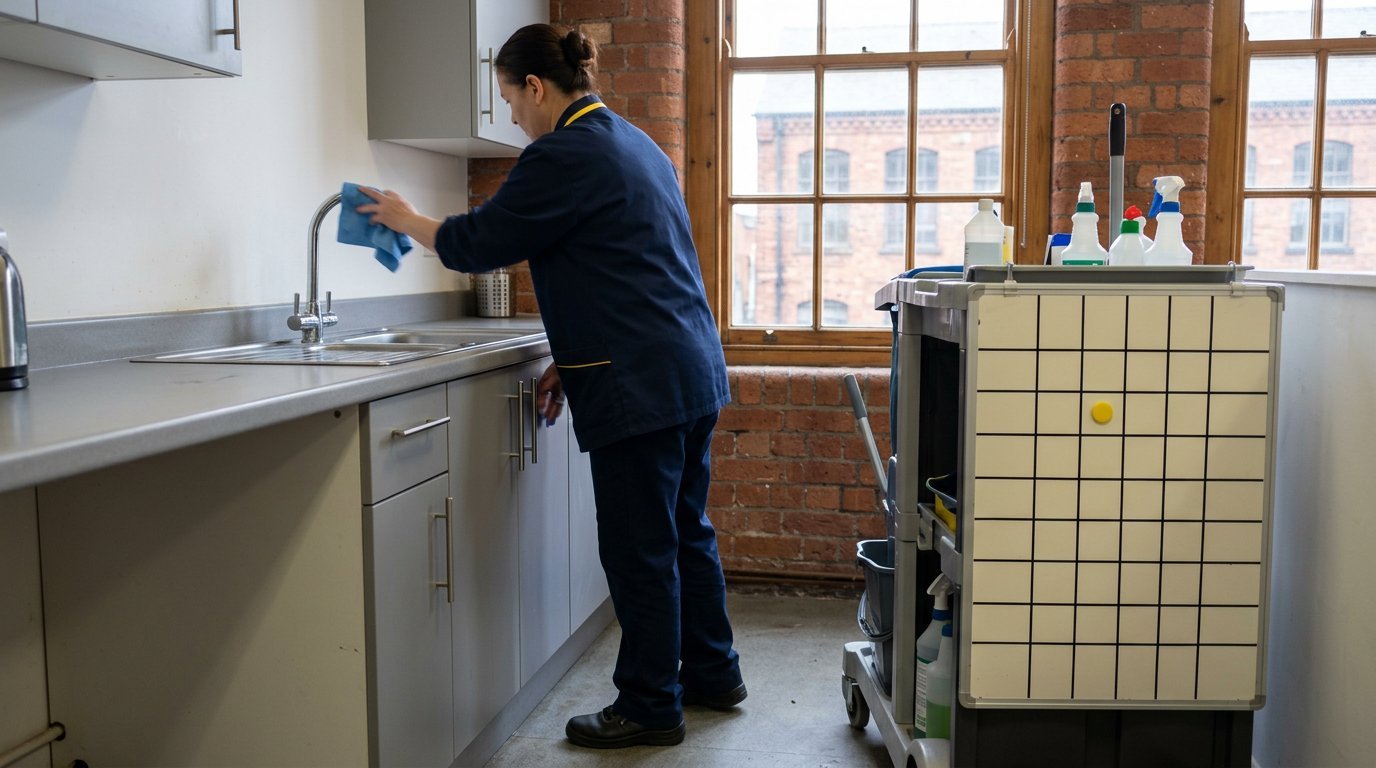

An office cleaning schedule template should divide work into daily, weekly and monthly tasks, assign responsibility and record completion. For offices and managed workplaces in Birmingham and the West Midlands, including Birmingham City Centre, Jewellery Quarter, Solihull, Sutton Coldfield, Wolverhampton, Walsall, Dudley, West Bromwich, Smethwick, Oldbury, Halesowen and Coventry, a clear schedule helps teams build routines around each site.
This guide explains what to include in daily and weekly checklists and how to tailor a blank template to your office’s rooms, occupancy and cleaning needs.
Key Takeaways
- Build daily checks around the areas that need attention each visit, including washrooms, kitchens, reception and high-touch points.
- Use weekly tasks for work such as cleaning glass partitions, dusting window sills and damp-mopping hard floors.
- Give each checklist task a named responsibility, a frequency and a way to record completion so the schedule supports accountability.
- Adjust the task list to your office layout and how each space is used, rather than applying the same routine everywhere.
What should be included in a daily office cleaning checklist?
For UK offices, a practical cleaning schedule sets tasks and frequencies according to each area and its use. There is no single daily checklist that suits every workplace. Separate routine hygiene tasks from weekly and monthly maintenance, and record who is responsible and whether each task is complete.
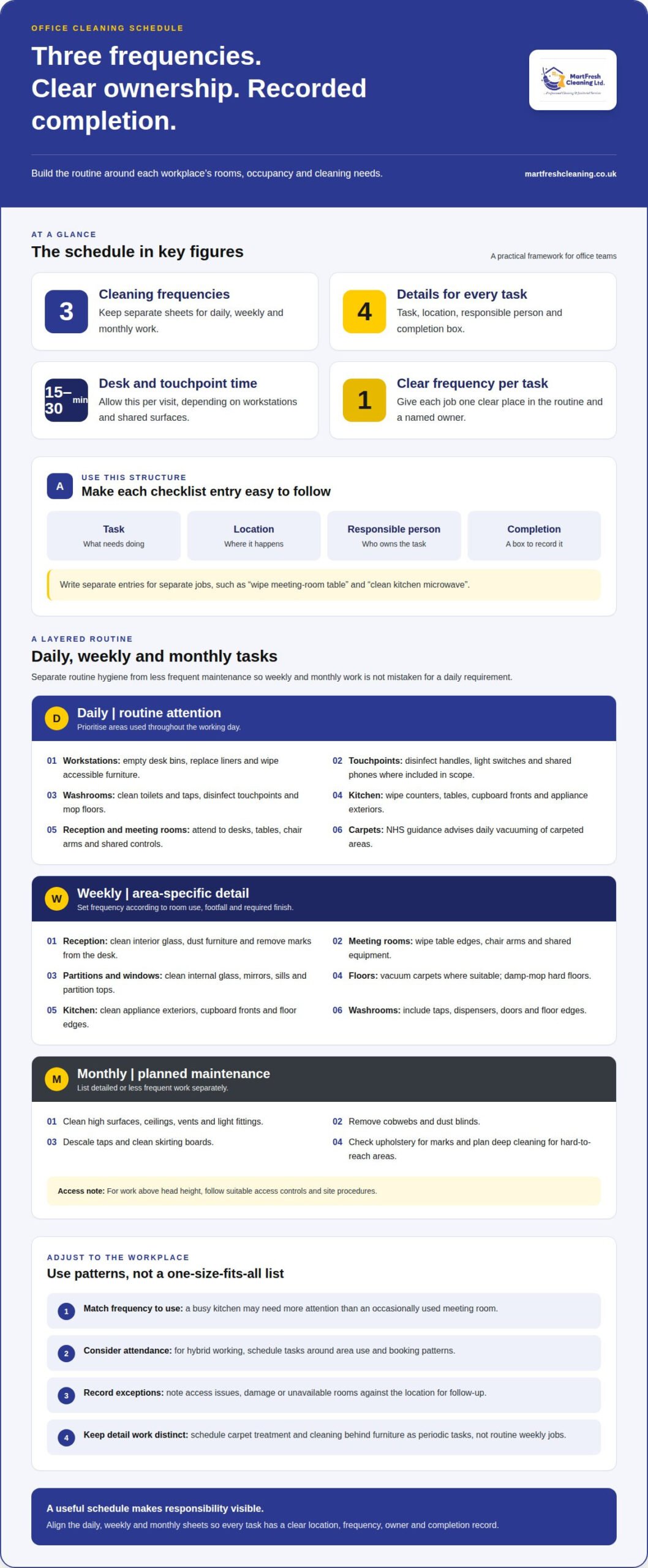
Use three blank templates: daily, weekly and monthly. Give each row a task, location, responsible person and completion box. For example, list “wipe meeting-room table” separately from “clean kitchen microwave”. Clear entries make the scope easier to follow and help managers spot missed work without scanning an unsorted list.
Organise the daily office cleaning list around areas used throughout the working day:
- Empty bins, replace liners and remove rubbish from desks and shared rooms.
- Disinfect high-touch surfaces, including door handles, light switches and shared phones.
- Clean toilets, kitchen counters and sinks; wipe the microwave exterior and table surfaces.
- The NHS advises vacuuming carpeted areas daily.
Keep weekly tasks separate, such as cleaning internal glass, partition tops and window sills. This prevents less frequent jobs being mistaken for daily requirements. Monthly rows can cover high surfaces, ceilings, vents, light fittings and cobweb removal. For work above head height, follow suitable access controls and site procedures.
Use monthly tasks for maintenance that needs a more detailed clean. Examples include descaling taps, cleaning skirting boards, dusting blinds and checking upholstery for marks. A planned deep-clean task can also cover hard-to-reach areas behind furniture. List microwave interiors separately if they are part of the agreed scope.
Review the schedule when room use changes. A busy kitchen may need more frequent attention than a meeting room used occasionally. Keep the daily, weekly and monthly sheets aligned so every task has one clear frequency and a named owner.
Weekly office cleaning tasks
Set cleaning frequency according to room use, footfall and the required finish. A reception used throughout the day needs a different routine from an occasional-use meeting room. NHS guidance says cleaning schedules should identify staff responsibilities, frequencies and cleaning methods. Record each task against a named role and note its completion.
How often should each office area be cleaned? Toilets and kitchens need frequent attention, while glass partitions, window sills and door frames can go on the weekly list. Vacuum waiting-area and common-room carpets weekly. Adjust other tasks according to use, visible soiling and the agreed cleaning standard.
A weekly checklist can include these area-specific tasks:
- Reception: clean interior glass, dust furniture and remove marks from the desk.
- Meeting rooms: wipe table edges, chair arms and shared equipment.
- Partitions and windows: clean internal glass, mirrors, sills and partition tops.
- Floors: vacuum carpets where weekly cleaning suits use; damp-mop hard floors.
- Kitchen: clean appliance exteriors, cupboard fronts and floor edges.
For toilets, include taps, dispensers, doors and floor edges alongside routine cleaning. Shared spaces also need attention to touchpoints such as push plates and communal phones. Specify which surfaces need disinfecting and the method to use.
How should you adapt the schedule for hybrid working? Use attendance patterns to set task frequency by area, rather than assigning work by weekday alone. For example, schedule meeting-room tables after regular booking days while maintaining the required routine in toilets and kitchens. Keep responsibility clear as occupancy shifts.
Separate weekly cleaning from periodic detail work. A deep-clean task might cover carpet treatment, the space under furniture or areas behind large appliances. Put these jobs on a periodic schedule and record the method and responsible role. This keeps the weekly routine manageable and prevents detail work from being overlooked between visits.
Daily office cleaning tasks
A daily cleaning checklist should identify the tasks that protect desk hygiene and keep busy work areas presentable. Allow 15 to 30 minutes per visit for desks and touchpoints, depending on the number of workstations and shared surfaces. Record completion by zone, such as open-plan desks, private offices and meeting rooms.
For desks and cubicles, remove waste and loose debris before wiping surfaces. Clean desk tops, chair seats and armrests, then disinfect shared touchpoints such as keyboards or desk phones if they are included in the agreed scope. Avoid moving papers or personal items. Clean accessible surfaces and leave work materials in place.
- Workstations: empty desk bins, replace liners and wipe accessible furniture.
- Meeting rooms: clean tables, chair arms, door handles and shared controls.
- Reception: dust the desk, clean interior glass and vacuum or mop floors.
- Kitchen: wipe counters, tables, cupboard fronts and appliance exteriors, including the microwave.
- Washrooms: empty bins, clean toilets and taps, disinfect touchpoints, and mop floors.
In the kitchen, remove rubbish and discarded food from shared areas. Wipe the fridge exterior and clean accessible handles. Specify which surfaces and appliances are included so staff can distinguish routine tasks from occasional internal cleaning.
Plan floor care according to the floor type and how the area is used. Vacuum carpeted work areas and remove visible marks from hard floors. Clean entrance matting and floor edges where dirt collects. In a busy office, list the entrance, corridors and reception separately rather than recording one broad “floors” task.
Mark each completed task and record any access issue or damage that prevented it. Note a missed workstation or unavailable meeting room against its location so the outstanding item can be followed up on the next visit. This makes the daily routine easier to track across different workplace areas.
Office cleaning schedule templates
A useful office cleaning schedule template turns recurring work into trackable tasks. Include the task, location, responsible person, frequency and completion status. Keep daily, weekly and monthly work on separate sheets so routine duties remain distinct from periodic detail cleaning.
Set up each blank template with clear columns:
- Task: name the job, such as wiping kitchen furniture.
- Area: identify the room, floor or specific workstation.
- Frequency: mark daily, weekly or monthly.
- Responsibility: assign a staff role or cleaning services team.
- Completion: provide a box and space for notes.
Add a priority key to distinguish hygiene-critical tasks from presentation work. For example, list washroom touchpoints separately from dusting meeting-room furniture. In the kitchen, record appliance exteriors, the fridge handle, sink and towel replenishment as separate checks. This makes the scope specific and avoids vague entries such as “clean kitchen”.
For a small business, keep one sheet organised by room, with daily checks for washrooms and the kitchen, plus weekly tasks for less-used spaces. Guidance for offices up to 500 sq ft suggests 1-2 hours for cleaning. Use the schedule to show responsibility and task completion, rather than treating that time as a fixed allowance.
For a large office, divide the schedule by floor or zone. Guidance for offices measuring 1,500-3,000 sq ft suggests 3-4 hours for cleaning. Include separate rows for reception, meeting rooms, workstations and shared facilities, so completion can be recorded area by area.
Print a few copies for relevant zones, then laminate reusable sheets and mark them with a whiteboard marker. Keep a master version for monthly review. Update task rows when furniture, room use or the cleaning routine changes, so the template continues to reflect the site.
MartFresh Cleaning: Office & Commercial Cleaning
MartFresh Cleaning Ltd provides Office & Commercial Cleaning for workplaces that need a defined, recurring cleaning schedule. The agreed scope can reflect your site requirements, operating hours, cleaning frequency and areas needing attention, from reception and meeting rooms to kitchens and washrooms.
If your checklist is difficult to manage or routine tasks are being missed, a written cleaning specification can clarify expectations. Task checklists support quality control, while risk assessments, method statements and COSHH information form part of the company’s documented health and safety procedures. MartFresh also provides Block & Communal Area Cleaning, After-Builders & Post-Construction Cleaning and End-of-Tenancy Cleaning for managed properties and projects.
For workplaces in Birmingham and the wider West Midlands, contact MartFresh Cleaning Ltd to discuss your office cleaning requirements and schedule.
Keep your cleaning plan aligned with your workplace
An office cleaning schedule template should remain a working document as your site changes. New desk layouts, hybrid attendance patterns or a repurposed meeting room can change which areas need attention and when. Build a regular review into your facilities process, then update responsibilities and task records when the building’s use changes.
When managing a consistent workplace cleaning routine takes time away from other facilities priorities, MartFresh Cleaning Ltd can support commercial sites with agreed specifications and task checklists. The team also provides Block & Communal Area Cleaning, After-Builders & Post-Construction Cleaning and End-of-Tenancy Cleaning for relevant properties and projects.
A clear scope helps align cleaning delivery with your site’s requirements. The MartFresh team brings practical commercial cleaning experience to scheduled work, supported by documented health and safety procedures.
Contact MartFresh Cleaning to discuss your workplace cleaning requirements and take the next step towards a schedule that fits your site.
Frequently Asked Questions
How often should an office in Birmingham receive an ongoing cleaning schedule?
Set recurring visits according to occupancy, visitor flow and facilities use. No single interval suits every site. An office with frequent client appointments may need a different pattern from a workplace used intermittently. Align visits with the building’s operating pattern and adjust scheduled days when seasonal peaks, events or changes to opening hours affect how the space is used.
How often should a workplace be cleaned?
Plan routine cleaning and incident response separately. A spill or unexpectedly busy room may need attention before the next planned visit. Make the reporting route clear, including who receives the report and how the affected area is recorded. This gives staff a way to flag immediate needs without changing the routine task list.
What are the best tips for designing a Cleaning Schedule?
Walk through the site during normal working hours instead of designing the schedule from a floor plan alone. Note where dirt gathers, which doors are frequently touched and whether furniture blocks access. Check that each task description is clear enough for another operative to understand what completion involves. Use plain verbs and define limits, such as cleaning accessible surfaces only.
What elements should a Cleaning Schedule include?
Add site-specific instructions that affect delivery, such as approved access points, rooms with restricted entry and surface-care notes. State what completion looks like for each task so the expected standard is clear. Keep product safety information and applicable COSHH documentation available to the cleaning team. Detailed technical instructions do not need to be squeezed into every task description.
What file formats can I download for a Cleaning Schedule?
Manage the schedule in an editable spreadsheet or a printed document, depending on how it will be maintained and shared. A spreadsheet lets users sort tasks by area or status; a printed document can work well on a noticeboard or in a sign-off folder. A PDF preserves the layout for circulation, while an editable file supports revisions. Choose a format that suits the people using and maintaining it.
What should an office cleaning schedule template include?
Define the service boundary by identifying included rooms, access limits and tasks handled by another team. Include a way to report defects, such as a leaking tap or damaged chair, without assigning repairs to cleaning staff. Keeping cleaning records separate from maintenance actions gives facilities managers a clearer handover and avoids implying that a repair has been completed.